

What is the typical size of an injection molding barrel?
As a seasoned supplier of injection molding barrels, I often get asked about the typical sizes of these essential components in the injection molding industry. Understanding the typical sizes of injection molding barrels is crucial for manufacturers, as it directly impacts the efficiency, productivity, and quality of the injection molding process. In this blog post, I'll delve into the factors that influence the size of injection molding barrels, the typical sizes available in the market, and how to choose the right size for your specific application.
Factors Influencing the Size of Injection Molding Barrels
The size of an injection molding barrel is not arbitrarily determined; rather, it is influenced by several key factors that are specific to the injection molding process and the requirements of the final product.
-
Injection Volume: One of the primary factors influencing the size of an injection molding barrel is the required injection volume. The injection volume refers to the amount of molten plastic that needs to be injected into the mold cavity in each cycle. Larger injection volumes typically require larger barrels to accommodate the necessary amount of plastic. For example, in the production of large automotive parts or household appliances, high injection volumes are often required, necessitating the use of larger barrels.
-
Mold Size and Complexity: The size and complexity of the mold also play a significant role in determining the appropriate barrel size. Larger molds with more complex geometries may require a larger barrel to ensure that the molten plastic can fill the entire mold cavity evenly and completely. Additionally, molds with multiple cavities or intricate features may demand a higher injection pressure, which can be better achieved with a larger barrel.
-
Material Type: Different plastic materials have varying flow properties and processing requirements. Some materials, such as polypropylene and polyethylene, have good flowability and can be processed with smaller barrels. On the other hand, materials like polycarbonate and ABS may require larger barrels to ensure proper melting and plasticization. The viscosity of the plastic material also affects the barrel size, as higher viscosity materials require more energy to melt and flow, which can be provided by a larger barrel.
-
Machine Capacity: The capacity of the injection molding machine itself is another crucial factor. The machine's clamping force, injection speed, and screw diameter all need to be considered in relation to the barrel size. A larger machine with higher clamping force and injection speed can generally accommodate a larger barrel, while a smaller machine may be limited to smaller barrel sizes.
Typical Sizes of Injection Molding Barrels
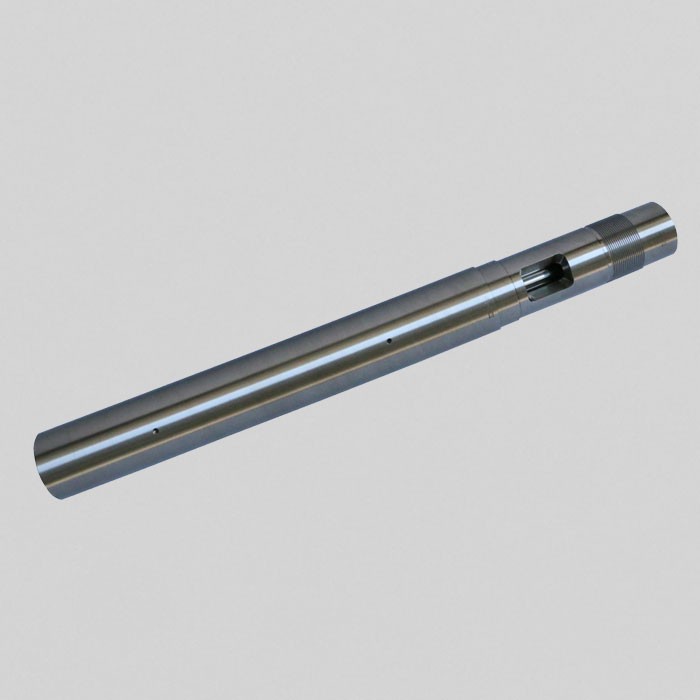
Injection molding barrels come in a wide range of sizes to meet the diverse needs of the industry. The size of a barrel is typically specified by its inner diameter (ID) and length.
-
Inner Diameter (ID): The inner diameter of an injection molding barrel can range from as small as 18 mm to over 100 mm. Smaller diameter barrels, typically in the range of 18 - 30 mm, are commonly used for precision molding applications, such as the production of small electronic components or medical devices. These barrels are suitable for low injection volumes and require less plastic material. Medium-sized barrels with an ID of 30 - 60 mm are widely used in general-purpose injection molding for products like consumer goods, toys, and packaging. Larger diameter barrels, with an ID of 60 mm or more, are used for high-volume production of large parts, such as automotive bumpers, industrial containers, and furniture components.
-
Length: The length of an injection molding barrel is also an important parameter. Barrels are available in various lengths, usually ranging from 10 to 30 times the inner diameter. Longer barrels provide more surface area for heat transfer and plasticization, which can result in better melting and mixing of the plastic material. However, longer barrels also require more energy to heat and cool, and may increase the cycle time. Shorter barrels are more suitable for applications where fast cycle times are required, or where the plastic material is easy to process.
Choosing the Right Size of Injection Molding Barrel
Selecting the appropriate size of an injection molding barrel is a critical decision that can significantly impact the performance and cost-effectiveness of the injection molding process. Here are some guidelines to help you choose the right barrel size for your specific application:
-
Understand Your Requirements: Start by clearly defining your production requirements, including the injection volume, mold size, material type, and desired cycle time. This will help you narrow down the range of suitable barrel sizes.
-
Consult with Experts: As an [Supplier of injection molding barrels], we have extensive experience and knowledge in the field. Our team of experts can provide valuable advice and guidance on selecting the right barrel size based on your specific needs. We can also assist you in evaluating the performance and cost implications of different barrel sizes.
-
Consider Future Expansion: When choosing a barrel size, it's important to consider your future production needs. If you anticipate an increase in production volume or the need to process different types of materials in the future, it may be wise to choose a slightly larger barrel that can accommodate these changes.
-
Evaluate Cost and Performance: While larger barrels may offer certain advantages in terms of injection volume and processing capabilities, they also come with higher costs. It's essential to evaluate the cost-benefit ratio of different barrel sizes and choose the one that provides the best balance between performance and cost.
Our Range of Injection Molding Barrels
At our company, we offer a comprehensive range of injection molding barrels to meet the diverse needs of our customers. Our product portfolio includes Sintered Hard Alloy Barrel for Injection Molding Machine, Injection Screw Barrel, and Barrel in Injection Moulding.
Our sintered hard alloy barrels are made from high-quality materials and are designed to provide excellent wear resistance and corrosion resistance, ensuring a long service life. The injection screw barrels are precision-engineered to ensure efficient plasticization and injection of the molten plastic. And our barrels for injection molding are available in a variety of sizes and configurations to suit different applications.
We understand that every customer has unique requirements, and we are committed to providing customized solutions to meet those needs. Our team of experienced engineers can work closely with you to design and manufacture the perfect injection molding barrel for your specific application.
Conclusion
In conclusion, the typical size of an injection molding barrel depends on a variety of factors, including injection volume, mold size, material type, and machine capacity. By understanding these factors and following the guidelines outlined above, you can choose the right barrel size to optimize the performance and efficiency of your injection molding process.
If you are in the market for high-quality injection molding barrels, we invite you to [Contact us to discuss your requirements]. Our team of experts is ready to assist you in finding the perfect solution for your injection molding needs. Whether you need a standard barrel or a custom-designed one, we have the expertise and resources to deliver a product that meets your expectations.
References
- "Injection Molding Handbook" by O. Olaniyi, CRC Press.
- "Plastics Processing Machinery" by S. Middleman, Hanser Publications.
- Industry reports and technical papers on injection molding technology.