

Hey there! As a supplier of extruder bimetallic barrels, I often get asked about the thermal expansion coefficient of these barrels. So, I thought I'd take some time to break it down for you all.
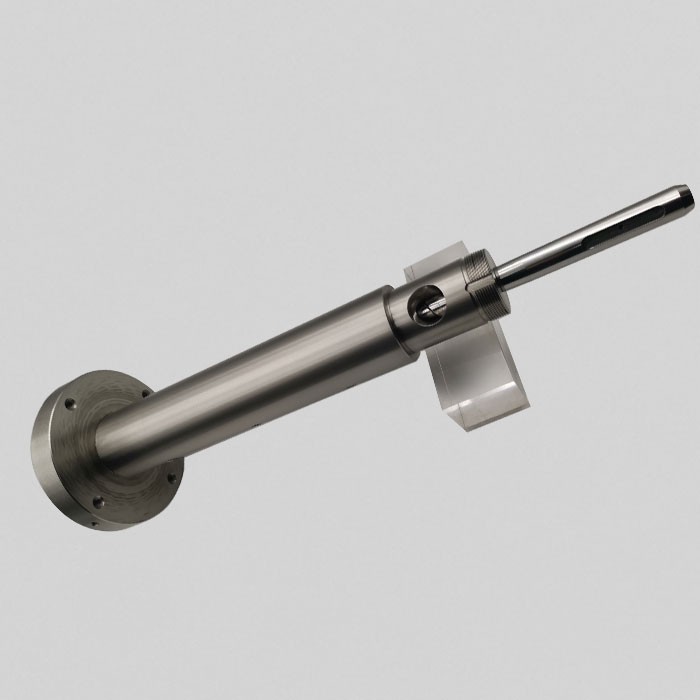

First off, let's talk about what an extruder bimetallic barrel is. If you're not familiar, you can check out this link: Extruder Bimetallic Barrel. These barrels are a key component in extrusion machines. They're made up of two different metals, usually with a hard outer layer and a more ductile inner layer. This combination gives them excellent wear resistance and mechanical properties, which is super important in the high - stress environment of an extruder.
Now, the thermal expansion coefficient. What the heck is that? Well, it's a measure of how much a material expands or contracts when its temperature changes. Every material has its own unique thermal expansion coefficient, and for an extruder bimetallic barrel, this coefficient is crucial.
You see, in an extruder, the barrel is exposed to high temperatures. As the temperature rises, the barrel will expand. If the expansion isn't properly accounted for, it can lead to all sorts of problems. For example, if the barrel expands too much, it might cause misalignment with other parts of the extruder, like the screw. This can result in reduced efficiency, increased wear and tear, and even product quality issues.
The thermal expansion coefficient of an extruder bimetallic barrel depends on a few factors. One of the main factors is the type of metals used in the barrel. Different metals have different thermal expansion coefficients. For instance, steel typically has a thermal expansion coefficient in the range of about 10 - 13 x 10⁻⁶ /°C, while some alloys might have slightly different values.
Another factor is the manufacturing process. How the two metals are bonded together can affect how the barrel expands and contracts. A well - made bimetallic barrel will have a uniform expansion across its length and diameter, which helps maintain the integrity of the extrusion process.
Let's take a closer look at the implications of the thermal expansion coefficient. In a real - world extruder operation, the temperature can vary quite a bit. When you start up the extruder, the barrel is at room temperature. As the machine heats up, the temperature can reach several hundred degrees Celsius. During this heating process, the barrel needs to expand in a controlled way.
If the thermal expansion coefficient is too high, the barrel might expand more than expected. This can cause the clearance between the barrel and the screw to change, leading to issues like poor material flow and inconsistent product dimensions. On the other hand, if the coefficient is too low, the barrel might not expand enough to accommodate the thermal stress, which can result in internal stresses and potential cracking.
To ensure that our extruder bimetallic barrels have the right thermal expansion coefficient, we use high - quality metals and advanced manufacturing techniques. We test each barrel thoroughly to make sure it meets the required standards. This way, our customers can be confident that their extruders will operate smoothly and efficiently.
Now, let's compare the extruder bimetallic barrel with another type of barrel, the extruder nitrided steel barrel. You can learn more about it here: Extruder Nitrided Steel Barrel. Nitrided steel barrels are also popular in the extrusion industry. They have a hard nitrided layer on the inner surface, which provides good wear resistance.
However, when it comes to thermal expansion, the bimetallic barrel has an edge. The combination of two different metals allows for a more tailored thermal expansion behavior. The outer layer can be selected to have a different thermal expansion characteristic than the inner layer, which helps in managing the overall expansion of the barrel. In contrast, a nitrided steel barrel is made of a single type of steel, so its thermal expansion is more uniform and might not be as adjustable.
The role of the barrel in an extruder is also worth discussing. You can find more information about it here: Barrel in Extruder. The barrel is responsible for containing the material being extruded and providing the necessary pressure and heat for the extrusion process. The thermal expansion coefficient directly impacts how well the barrel can perform these functions.
A barrel with the right thermal expansion coefficient will maintain a consistent clearance with the screw, ensuring proper material conveyance and mixing. It will also be able to withstand the repeated heating and cooling cycles without developing cracks or other defects. This is essential for long - term reliability and high - quality product output.
In conclusion, the thermal expansion coefficient of an extruder bimetallic barrel is a critical parameter that affects the performance and reliability of an extruder. As a supplier, we understand the importance of getting this right. We're committed to providing our customers with barrels that have the optimal thermal expansion characteristics.
If you're in the market for an extruder bimetallic barrel, or if you have any questions about thermal expansion coefficients or our products, don't hesitate to reach out. We're here to help you find the best solution for your extrusion needs. Whether you're a small - scale manufacturer or a large - scale industrial operation, we have the expertise and the products to meet your requirements. Let's start a conversation and see how we can work together to improve your extrusion process.
References
- Materials Science textbooks on thermal properties of metals
- Industry reports on extruder barrel performance and design