

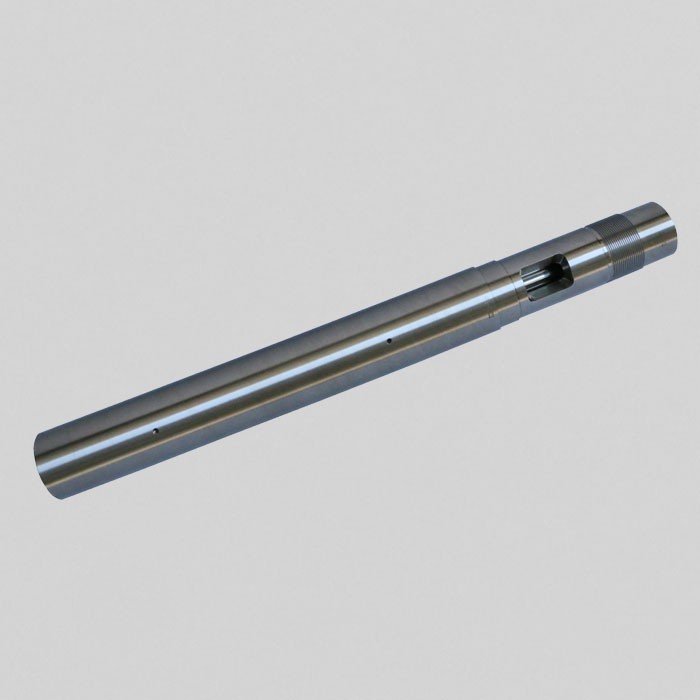
The screw's pitch in an injection screw barrel plays a crucial role in the injection molding process. As a leading supplier of injection screw barrels, we have in - depth knowledge and extensive experience in understanding the significance of this seemingly small yet highly influential parameter.
1. Basic Concept of Screw Pitch
The pitch of a screw refers to the distance between corresponding points on adjacent threads. In an injection screw barrel, it determines how the plastic material moves through the barrel. A well - designed pitch can ensure efficient material conveyance, melting, and mixing, which are essential for high - quality injection molding.

2. Impact on Material Conveyance
One of the primary functions of the screw in an injection screw barrel is to convey the plastic resin from the hopper towards the nozzle. The pitch directly affects the speed and efficiency of this conveyance. A larger pitch allows for a greater volume of material to be moved forward in each rotation of the screw. This is particularly beneficial when dealing with high - flow materials or when high - speed injection is required. For example, in the production of thin - walled plastic products, a larger pitch can help quickly fill the mold cavity, reducing cycle times and increasing productivity.
On the other hand, a smaller pitch provides more precise control over the material flow. It is suitable for materials that are sensitive to shear stress or require a more gentle handling. For instance, some engineering plastics with complex molecular structures may degrade under excessive shear. A smaller pitch can reduce the shear forces acting on the material during conveyance, ensuring the integrity of the plastic resin.
3. Influence on Melting Process
The screw pitch also has a significant impact on the melting of the plastic material. As the screw rotates, it compresses and shears the plastic, generating heat through friction. The pitch affects how the material is compressed and the amount of shear force applied.
A larger pitch may result in less compression and shear in the initial stages of the screw. This can lead to slower melting, especially for materials with high melting points. However, once the material reaches the later sections of the screw where the pitch may change or where there are specialized mixing elements, the heat generated can help complete the melting process.
Conversely, a smaller pitch can increase the compression and shear forces, promoting faster melting. The closer the threads, the more the material is squeezed and sheared, which generates more heat and accelerates the melting rate. This is advantageous for materials that need to be melted quickly, such as some thermoplastics used in rapid - prototyping applications.
4. Role in Mixing Performance
In addition to conveyance and melting, proper mixing of the plastic material is essential to ensure uniform properties in the final product. The screw pitch contributes to the mixing process.
A variable pitch screw design can enhance mixing. By changing the pitch along the length of the screw, the material experiences different flow patterns and shear forces. For example, a screw with a decreasing pitch towards the end can create a more turbulent flow, which helps in better dispersion of additives, colorants, or fillers in the plastic matrix. This results in a more homogeneous melt, which is crucial for producing high - quality plastic parts with consistent appearance and mechanical properties.
5. Compatibility with Different Materials
Different types of plastic materials have distinct properties, such as viscosity, melting point, and shear sensitivity. The screw pitch needs to be carefully selected to be compatible with the specific material being processed.
For low - viscosity materials, a larger pitch can be used to facilitate fast flow and efficient processing. These materials can easily move through the barrel with less resistance, and a larger pitch allows for a higher throughput. On the contrary, high - viscosity materials require a smaller pitch to provide the necessary compression and shear for melting and conveyance.
For example, when processing polypropylene, which has relatively low viscosity, a screw with a relatively large pitch can be employed. However, when dealing with polycarbonate, a high - performance engineering plastic with high viscosity, a screw with a smaller pitch is more appropriate to ensure proper melting and mixing.
6. Our Product Offerings
As an injection screw barrel supplier, we offer a wide range of products to meet the diverse needs of our customers. Our Nitrided Steel Barrel for Injection Molding Machine is known for its excellent wear resistance and corrosion resistance. The screw design in these barrels can be customized with different pitches to suit various materials and processing requirements.
Our Injection Machine Barrel is designed with precision engineering to ensure optimal performance. We can adjust the screw pitch according to the specific application, whether it is for high - speed production or for processing sensitive materials.
Moreover, our Sintered Hard Alloy Barrel for Injection Molding Machine is suitable for applications where extreme wear resistance is required. The screw in these barrels can be tailored with the right pitch to enhance the overall efficiency of the injection molding process.
7. Conclusion and Call to Action
In conclusion, the pitch of the screw in an injection screw barrel is a critical factor that affects material conveyance, melting, mixing, and compatibility with different materials. A well - designed screw pitch can significantly improve the quality of the final product, increase production efficiency, and reduce costs.
If you are in the injection molding industry and are looking for high - quality injection screw barrels with optimized screw pitch designs, we are here to help. Our team of experts can provide professional advice and customized solutions based on your specific needs. Contact us today to start a discussion about your injection molding requirements and explore how our products can enhance your production process.
References
- "Injection Molding Handbook" by O. John Hanna
- "Plastics Processing: Principles and Modeling" by Z. Tadmor and C. G. Gogos