

Hey there! As a supplier of extruder bimetallic barrels, I've been getting a lot of questions lately about the effects these barrels have on the extrusion of composite materials. So, I thought I'd take a moment to break it down for you all.
First off, let's talk about what composite materials are. Composite materials are made by combining two or more different materials with different physical or chemical properties. The result is a material that has improved properties compared to the individual components. These materials are used in a wide range of industries, from automotive to aerospace, because of their high strength-to-weight ratio, corrosion resistance, and other desirable characteristics.
Now, when it comes to extruding composite materials, the choice of equipment is crucial. And that's where the bimetallic barrel comes in. A bimetallic barrel is a type of extruder barrel that's made up of two different metals. Typically, the inner layer is made of a hard, wear-resistant material, while the outer layer is made of a more ductile material. This combination gives the barrel excellent wear resistance and thermal conductivity, which are both important factors in the extrusion process.
One of the main effects of using a bimetallic barrel in the extrusion of composite materials is improved wear resistance. Composite materials often contain abrasive fillers, such as glass fibers or carbon fibers, which can cause significant wear on the extruder barrel. A bimetallic barrel's hard inner layer can withstand this abrasion much better than a traditional single-metal barrel. This means that the barrel will last longer, reducing the need for frequent replacements and saving you money in the long run.
For example, if you're extruding a composite material with a high percentage of glass fibers, a bimetallic barrel will be able to maintain its shape and surface finish for a much longer time compared to a regular barrel. This is important because any wear or damage to the barrel can affect the quality of the extruded product. A worn barrel may cause uneven flow of the composite material, leading to defects in the final product.
Another important effect is better thermal conductivity. During the extrusion process, heat is generated as the composite material is forced through the barrel. If the barrel can't dissipate this heat effectively, it can lead to overheating of the material, which can cause degradation and affect its properties. The bimetallic barrel's outer layer, which is made of a more thermally conductive material, helps to transfer the heat away from the inner layer and the material being extruded.
This is especially important when extruding composite materials that are sensitive to heat. For instance, some thermoplastic composites may start to decompose at high temperatures. By using a bimetallic barrel with good thermal conductivity, you can keep the temperature of the material within the optimal range, ensuring that the extruded product has the desired properties.
In addition to wear resistance and thermal conductivity, a bimetallic barrel can also improve the mixing and homogenization of the composite material. The design of the barrel, along with the interaction between the screw and the barrel, can create a more turbulent flow of the material. This helps to ensure that the different components of the composite material are well mixed, resulting in a more uniform product.
Let's say you're extruding a composite material that consists of a polymer matrix and multiple additives. A bimetallic barrel can help to break up any agglomerates of the additives and distribute them evenly throughout the polymer matrix. This leads to a more consistent product with better mechanical and physical properties.
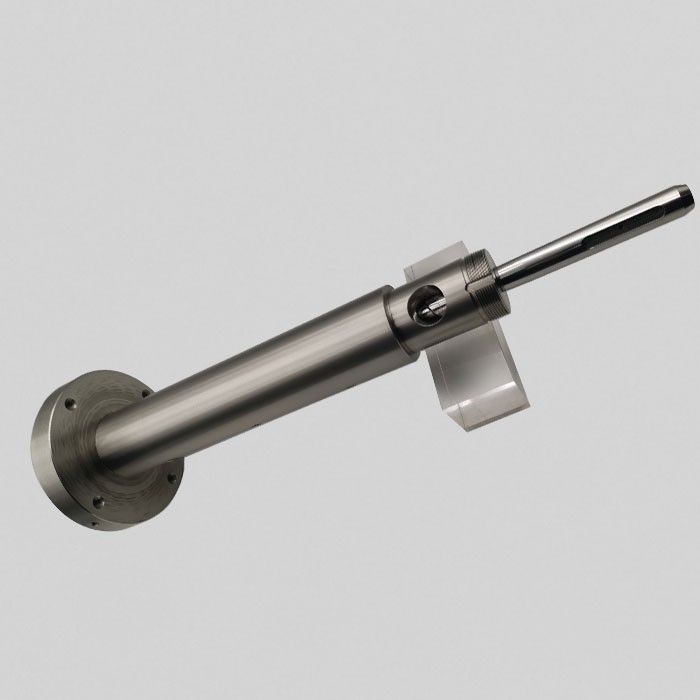
Now, you might be wondering where you can find high-quality bimetallic barrels for your extrusion needs. Well, we offer a wide range of Extruder Bimetallic Barrel that are designed specifically for the extrusion of composite materials. Our barrels are made using the latest manufacturing techniques and high-quality materials to ensure optimal performance.
We also have Barrel Screw Extruder and Plastic Extruder Screw Barrel options available, which can be customized to meet your specific requirements. Whether you're extruding small batches of composite materials or running a large-scale production line, we have the right solution for you.
If you're interested in learning more about our products or have any questions about the extrusion of composite materials, don't hesitate to get in touch. We're here to help you make the most of your extrusion process and achieve the best results with your composite materials. Just reach out to us, and we'll be happy to discuss your needs and provide you with all the information you need.
In conclusion, the bimetallic barrel has a significant impact on the extrusion of composite materials. Its improved wear resistance, thermal conductivity, and ability to enhance mixing and homogenization make it an ideal choice for this application. By using a bimetallic barrel, you can improve the quality of your extruded products, increase the efficiency of your extrusion process, and save on costs in the long term. So, if you're in the business of extruding composite materials, consider making the switch to a bimetallic barrel and experience the difference it can make.
References

- "Handbook of Polymer Extrusion" by James L. White and Paul D. Phillips
- "Composite Materials: Design and Applications" by David Hull and T. W. Clyne