

When it comes to the operation of an extruder, one of the most critical decisions is choosing the appropriate screw geometry for the extruder barrel. As a reputable extruder barrel supplier, I've witnessed firsthand how the right screw geometry can significantly enhance the efficiency, quality, and overall performance of an extrusion process. In this blog, I'll share some insights on how to make this crucial choice.
Understanding the Basics of Extruder Barrel and Screw Interaction
Before delving into the details of screw geometry, it's essential to understand the fundamental relationship between the extruder barrel and the screw. The extruder barrel is the housing that contains the screw and provides the environment for the plasticizing and conveying of materials. It is designed to withstand high pressures and temperatures. You can learn more about the extrusion barrel on our Extrusion Barrel page.
The screw, on the other hand, is the heart of the extruder. It rotates inside the barrel, performing three main functions: feeding, melting, and pumping the polymer. The screw geometry determines how effectively these functions are carried out. A well - designed screw can ensure uniform melting, proper mixing, and efficient throughput of the material.
Factors Affecting Screw Geometry Selection
1. Material Properties
The type of material being processed is one of the most important factors in choosing the screw geometry. Different polymers have different melting points, viscosities, and shear sensitivities. For example, crystalline polymers like polyethylene and polypropylene require a screw design that can provide sufficient melting energy. A screw with a long compression section is often suitable for these materials, as it allows for a gradual increase in pressure and temperature, promoting complete melting.
Amorphous polymers, such as polystyrene and polycarbonate, are more sensitive to shear. A screw with a lower compression ratio may be preferred to avoid excessive shear heating, which can cause degradation of the polymer. You can find more information about extruders suitable for various materials on our Extrusion Screw Barrel page.
2. Throughput Requirements
The desired throughput of the extruder also plays a significant role in screw geometry selection. Higher throughput requires a screw with a larger flight depth and a higher rotation speed. However, increasing the flight depth too much can lead to poor mixing and melting. A balance must be struck between throughput and the quality of the extruded product.
For applications where high throughput is required, a screw with a multi - stage design may be beneficial. These screws can have different sections optimized for feeding, melting, and pumping, allowing for efficient material processing at high speeds.
3. Product Quality
The quality of the final product is another crucial consideration. If the product requires high - precision dimensions and a smooth surface finish, a screw with good mixing capabilities is essential. A screw with mixing elements, such as pins or kneading blocks, can improve the homogeneity of the melt, reducing the presence of unmelted particles and ensuring a consistent product quality.
For products that require high strength and good mechanical properties, proper melting and orientation of the polymer chains are necessary. The screw geometry should be designed to promote these processes. Our Extruder Sintered Hard Alloy Barrel is often used in applications where high - quality extrusion is required.
Common Screw Geometries and Their Applications
1. Single - Flight Screw
The single - flight screw is the most basic type of screw. It has a single continuous flight that runs along the length of the screw. This type of screw is relatively simple to manufacture and is suitable for applications where a basic level of mixing and melting is required. It is commonly used in low - cost extruders for processing less demanding materials.
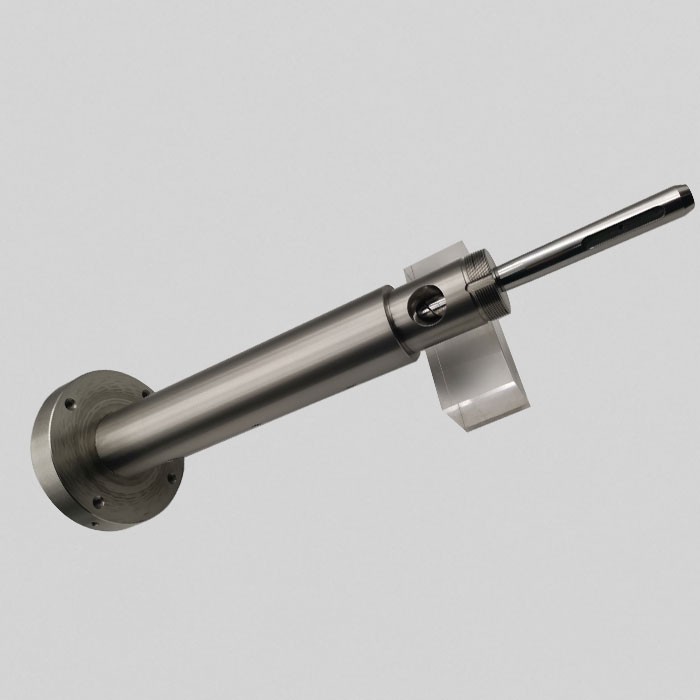

2. Double - Flight Screw
A double - flight screw has two parallel flights that run along the screw. This design provides better mixing and conveying capabilities compared to a single - flight screw. The double - flight screw can increase the throughput and improve the homogeneity of the melt. It is often used in applications where a higher level of mixing is needed, such as in the production of composite materials.
3. Barrier Screw
The barrier screw is designed to separate the solid and molten polymer phases more effectively. It has a secondary flight, called a barrier flight, which creates a separate channel for the molten polymer. This design allows for more efficient melting and reduces the risk of unmelted particles in the extruded product. Barrier screws are commonly used in applications where high - quality melting is required, such as in the production of films and fibers.
4. Mixing Screw
Mixing screws are equipped with special mixing elements, such as pins, kneading blocks, or Maddock mixing sections. These elements disrupt the flow of the polymer, promoting better mixing and dispersion of additives. Mixing screws are ideal for applications where uniform blending of different polymers or additives is necessary, such as in the production of colored plastics or polymer blends.
Testing and Optimization
Once a screw geometry has been selected, it is important to test the extruder to ensure that it meets the desired performance criteria. This may involve running trial extrusions and analyzing the quality of the extruded product. Parameters such as temperature, pressure, and screw speed can be adjusted to optimize the process.
If the initial screw design does not meet the requirements, modifications can be made. This may involve changing the flight depth, compression ratio, or adding or removing mixing elements. Continuous improvement and optimization are key to achieving the best results in extrusion.
Conclusion
Choosing the appropriate screw geometry for an extruder barrel is a complex but crucial decision. It requires a thorough understanding of the material properties, throughput requirements, and product quality expectations. By considering these factors and selecting the right screw design, you can significantly improve the efficiency and quality of your extrusion process.
As an extruder barrel supplier, we have the expertise and experience to help you make the best choice for your specific application. Our team of experts can provide customized solutions based on your requirements. If you are interested in learning more about our extruder barrels or need assistance in choosing the right screw geometry, please feel free to contact us for procurement and further discussions.
References
- Rauwendaal, C. (1986). Polymer Extrusion. Hanser Publishers.
- Tadmor, Z., & Gogos, C. G. (2006). Principles of Polymer Processing. Wiley - Interscience.