

Hey there! As a supplier of extruder screw barrels, I've seen firsthand how crucial the design of the feeding section is for the overall feeding efficiency. In this blog, I'm gonna break down how different aspects of the feeding section design can make or break the efficiency of the extrusion process.
The Basics of the Feeding Section
Let's start with the basics. The feeding section of an extruder is where the raw materials are introduced into the machine. It's like the entrance gate to the whole extrusion journey. The design of this section determines how smoothly and efficiently the materials can enter the extruder.
One of the key factors in the feeding section design is the geometry of the screw and barrel. The screw in the feeding section typically has a large pitch and a deep channel. This design allows for a large volume of material to be picked up and transported forward. The large pitch means that the screw rotates less to move the material a certain distance, which reduces the shearing forces on the material at the beginning of the process.
The barrel in the feeding section also plays a vital role. For example, an Extruder Nitrided Steel Barrel offers excellent wear resistance. Since the feeding section is where the raw materials first come into contact with the barrel, a nitrided steel barrel can withstand the abrasion caused by the incoming materials. This durability ensures that the barrel maintains its shape and size over time, which is essential for consistent feeding efficiency.
Influence of Screw Design on Feeding Efficiency
The screw design in the feeding section can have a huge impact on how well the materials are fed into the extruder. There are different types of screw designs, and each has its own advantages when it comes to feeding efficiency.
- Single - Flight Screw: A single - flight screw in the feeding section is a common choice. It has a simple design with one continuous thread around the screw shaft. This design is great for materials that are free - flowing. The single flight allows the material to be easily scooped up and transported forward. For instance, when dealing with granular plastics, a single - flight screw in the feeding section can quickly pick up the granules and start moving them towards the compression section of the extruder. Our Single Screw Extruder Screw Barrel often features a well - designed single - flight screw in the feeding section to ensure efficient feeding of various materials.
- Multi - Flight Screw: On the other hand, a multi - flight screw can be used for materials that are more difficult to feed. The multiple flights create more contact points with the material, which can help in better conveying the material. This is especially useful for materials that tend to bridge or clog in the feeding section. The additional flights break up the material and prevent it from forming large clumps, allowing for a more continuous and efficient feeding process.
Barrel Design and Its Role
The barrel design in the feeding section is not just about wear resistance. The internal surface finish of the barrel can also affect feeding efficiency. A smooth internal surface allows the material to slide more easily along the barrel, reducing the friction between the material and the barrel wall. This means that less energy is wasted in overcoming friction, and the material can be fed more efficiently.
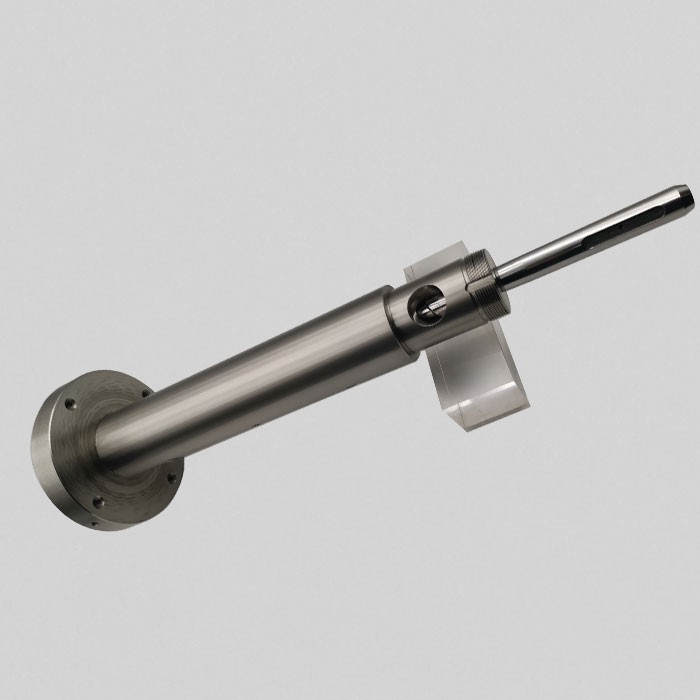

Another aspect of barrel design is the presence of grooves or channels on the internal surface. Some barrels in the feeding section are designed with longitudinal grooves. These grooves can act as additional pathways for the material to flow, increasing the overall feeding capacity. For example, an Extruder Bimetallic Barrel can be designed with such grooves. The bimetallic construction provides both the necessary wear resistance and the ability to be machined with precision to create these grooves for improved feeding.
Feeding Section Temperature Control
Temperature control in the feeding section is often overlooked, but it can have a significant impact on feeding efficiency. If the temperature in the feeding section is too high, the materials may start to soften or melt prematurely. This can cause the material to stick to the screw and barrel, leading to blockages and reduced feeding efficiency.
On the other hand, if the temperature is too low, especially for materials that are sensitive to cold, the material may become too rigid and difficult to feed. For example, some elastomeric materials may become brittle at low temperatures, making it hard for the screw to pick them up and transport them. Therefore, maintaining the right temperature in the feeding section is crucial for ensuring that the materials flow smoothly and are fed efficiently.
The Impact of Material Properties
The properties of the raw materials being fed also interact with the design of the feeding section. Different materials have different flow characteristics, particle sizes, and densities.
- Particle Size: Materials with larger particle sizes may require a feeding section design with a larger pitch screw and a wider barrel channel. This allows the large particles to be accommodated without getting stuck. For example, when feeding wood chips into an extruder, a screw with a large pitch and a deep channel in the feeding section is necessary to handle the relatively large size of the wood chips.
- Density: High - density materials may require more force to be fed into the extruder. A screw with a more aggressive design, such as a multi - flight screw with a smaller pitch, may be needed to ensure that the high - density material is properly conveyed. Low - density materials, on the other hand, may be more prone to bridging, so a design that breaks up the material, like a screw with mixing elements in the feeding section, can be beneficial.
Real - World Examples
I've worked with many customers who have faced feeding efficiency issues. One customer was using an extruder to process recycled plastic flakes. They were experiencing inconsistent feeding, with the flakes often clogging in the feeding section. After analyzing their situation, we recommended upgrading to an extruder with a Single Screw Extruder Screw Barrel that had a larger pitch screw in the feeding section. We also adjusted the temperature control in the feeding section to ensure that the recycled flakes were at an optimal temperature for feeding. After these changes, the customer saw a significant improvement in feeding efficiency, with fewer blockages and a more consistent output.
Conclusion
In conclusion, the design of the feeding section is a critical factor in determining the feeding efficiency of an extruder. From the screw and barrel geometry to temperature control and material properties, every aspect plays a role in how well the raw materials are fed into the machine.
If you're looking to improve the feeding efficiency of your extruder or are in the market for new extruder screw barrels, I'd love to have a chat with you. We can discuss your specific requirements and find the best solutions for your extrusion process. Don't hesitate to reach out and start the conversation about how we can optimize your feeding section design.
References
- "Extrusion of Polymers: Theory and Practice" by John A. Brydson
- "Plastics Extrusion Technology" by Michael W. Green