

Hey there! I'm an injection molding barrel supplier, and today I want to chat about how residence time affects the plastic properties in the barrel. It's a topic that's super important in the injection molding world, and understanding it can make a huge difference in the quality of your products.
First off, let's talk about what residence time is. In simple terms, it's the amount of time that plastic spends inside the injection molding barrel. This time can vary depending on a bunch of factors, like the speed of the screw, the size of the barrel, and the volume of plastic being processed.
Now, why does residence time matter? Well, it has a direct impact on the plastic's properties. When plastic is in the barrel, it's exposed to heat and shear forces. The longer it stays in there, the more these forces can affect it.
One of the main things that can happen is thermal degradation. Plastics are made up of polymers, and these polymers can break down when they're exposed to high temperatures for too long. When thermal degradation occurs, the plastic's molecular weight decreases. This can lead to a bunch of problems, like reduced strength, lower impact resistance, and changes in the plastic's viscosity. For example, if you're making a plastic part that needs to be strong and durable, thermal degradation can make it brittle and more likely to break.
Another effect of long residence times is the change in the plastic's viscosity. Viscosity is basically a measure of how thick or thin a fluid is. In the case of plastic, it affects how easily it can flow through the barrel and into the mold. As the plastic stays in the barrel longer, its viscosity can change. Usually, it becomes more viscous, which means it's thicker and harder to flow. This can cause issues during the injection molding process, like incomplete filling of the mold or uneven distribution of the plastic in the part.

On the flip side, if the residence time is too short, the plastic might not be properly melted or homogenized. This can result in parts with inconsistent properties. For example, you might have areas in the part that are under - melted, which can lead to weak spots or visible defects on the surface.
So, how can we control the residence time to get the best plastic properties? Well, as an injection molding barrel supplier, I've seen a few strategies that work.
First, adjusting the screw speed is a great way to control residence time. If you increase the screw speed, the plastic will move through the barrel faster, reducing the residence time. However, you need to be careful not to increase the speed too much, as this can also cause other problems, like excessive shear heating.
The size of the barrel also plays a role. A larger barrel will generally have a longer residence time for the same volume of plastic compared to a smaller barrel. So, choosing the right barrel size for your production needs is crucial.
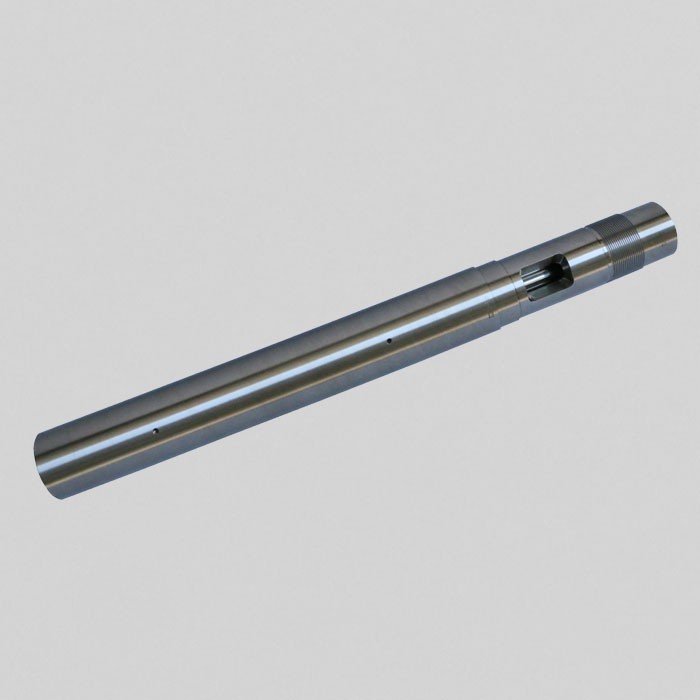
Now, let's talk about the types of barrels we offer as a supplier. We have the Injection Machine Barrel, which is designed to provide efficient and reliable plastic processing. It's built to withstand the high temperatures and pressures involved in injection molding, and it helps to ensure a consistent residence time for the plastic.
Our Injection Screw Barrel is another great option. The screw inside the barrel helps to move the plastic along and mix it properly. A well - designed screw can help to optimize the residence time and improve the quality of the plastic melt.
And then we have the Sintered Hard Alloy Barrel for Injection Molding Machine. This type of barrel is made from a special alloy that offers excellent wear resistance. It can handle the abrasive nature of some plastics and maintain its performance over a long period of time, which is important for consistent residence time and plastic properties.
In addition to these hardware solutions, it's also important to have a good understanding of the plastic materials you're using. Different plastics have different thermal stability and processing requirements. For example, some plastics can tolerate longer residence times without significant degradation, while others are more sensitive and need to be processed quickly.
Monitoring the process is also key. You can use sensors to measure the temperature and pressure inside the barrel, as well as the flow rate of the plastic. This data can help you adjust the process parameters to ensure the right residence time and optimal plastic properties.
To sum it up, residence time is a critical factor in injection molding. It can have a big impact on the plastic's properties, and controlling it properly is essential for producing high - quality parts. As an injection molding barrel supplier, we're here to help you choose the right barrels and provide support to optimize your injection molding process.
If you're interested in learning more about our products or have any questions about how to improve the plastic properties in your injection molding process, don't hesitate to reach out. We're always happy to have a chat and help you find the best solutions for your business. Whether you're a small - scale manufacturer or a large production facility, we've got the expertise and products to meet your needs. So, let's get in touch and start making better plastic parts together!
References
- "Injection Molding Handbook" by O. Sabliov
- "Plastics Processing Technology" by M. Xanthos