

In the world of industrial manufacturing, the durability of components is a critical factor that directly impacts productivity, cost - effectiveness, and overall operational efficiency. When it comes to screws used in abrasive environments, the question of whether PVD coated screws are more durable is one that demands in - depth exploration. As a PVD coating screw supplier, I have witnessed the practical applications of these screws in various industrial settings and have gathered valuable insights through years of experience.
Understanding Abrasive Environments
Abrasive environments are characterized by the presence of hard particles or substances that can cause wear and tear on materials over time. These environments can be found in a wide range of industries, including mining, construction, injection molding, and food processing. In mining, for example, screws are exposed to rock particles and dust, which can rapidly erode unprotected surfaces. In injection molding, the screws come into contact with abrasive polymers and fillers, leading to abrasion and corrosion.
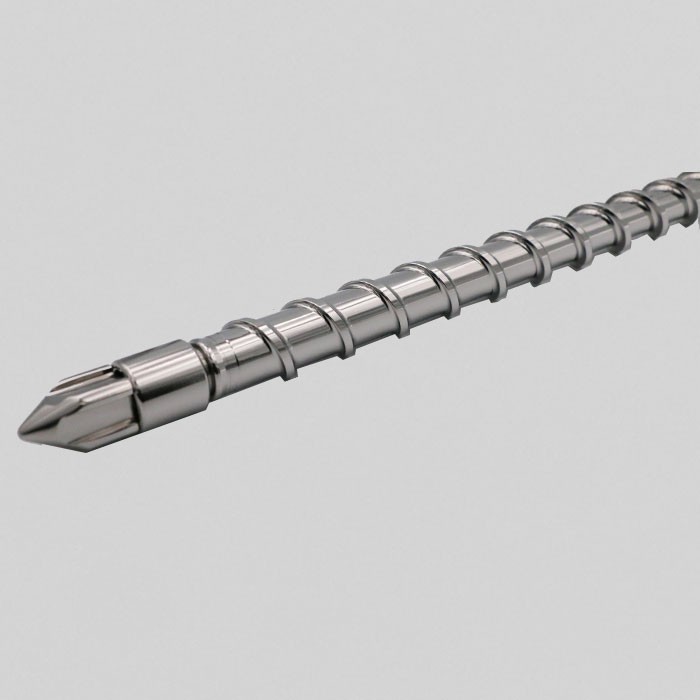

The constant abrasion in these environments can lead to several problems. First, it can reduce the lifespan of the screws, necessitating frequent replacements. This not only increases the cost of production but also causes downtime as the machinery has to be stopped for maintenance. Second, wear on the screws can affect the quality of the final product. In injection molding, a worn - out screw may not be able to mix the polymer materials evenly, resulting in defective products.
What is PVD Coating?
Physical Vapor Deposition (PVD) is a process in which a thin film of material is deposited onto the surface of a substrate in a vacuum environment. In the case of screws, the PVD coating is typically a hard ceramic or metallic material, such as titanium nitride (TiN), titanium carbonitride (TiCN), or chromium nitride (CrN).
The PVD coating process involves several steps. First, the screws are thoroughly cleaned to remove any contaminants from the surface. Then, they are placed in a vacuum chamber. A target material, which is the source of the coating, is vaporized using a high - energy source, such as an electron beam or an ion gun. The vaporized atoms or molecules are then deposited onto the surface of the screws, forming a thin, uniform coating.
Why PVD Coated Screws Might Be More Durable
There are several reasons why PVD coated screws are expected to be more durable in abrasive environments.
Hardness
One of the primary advantages of PVD coatings is their high hardness. Materials like TiN and TiCN have a hardness that is significantly higher than that of the base metal of the screw. For example, the hardness of TiN can be up to 2500 HV (Vickers hardness), while the hardness of steel, which is a common material for screws, is usually in the range of 200 - 300 HV. This high hardness allows the coating to resist the abrasion caused by hard particles in the environment. When an abrasive particle comes into contact with the coated screw, the hard coating acts as a barrier, preventing the particle from scratching or wearing away the base metal.
Low Friction
PVD coatings also have a low coefficient of friction. This means that when the screw is in contact with other materials, there is less resistance to movement. In an abrasive environment, a low - friction surface reduces the amount of heat generated during the interaction between the screw and the abrasive particles. Heat can accelerate the wear process by softening the material and promoting chemical reactions. By reducing friction and heat, the PVD coating helps to extend the lifespan of the screw.
Corrosion Resistance
In addition to abrasion, screws in many environments are also exposed to corrosion. PVD coatings can provide excellent corrosion resistance. For instance, CrN coatings are known for their ability to protect the base metal from corrosion caused by moisture, chemicals, and other corrosive agents. In an injection molding process where the polymer materials may contain additives that can be corrosive, a PVD coated screw can resist the corrosion and maintain its integrity for a longer time.
Real - World Applications and Evidence
In the injection molding industry, the use of PVD coated screws has shown significant benefits. Our company has supplied Pvd Coating Screw to numerous injection molding companies. These companies have reported a significant increase in the lifespan of their screws.
For example, a company that manufactures plastic parts for the automotive industry was using traditional, uncoated screws in their injection molding machines. The screws were wearing out quickly due to the abrasive nature of the polymer materials they were processing, which contained glass fibers. After switching to our PVD coated screws, they noticed a reduction in screw replacement frequency from once every two months to once every six months. This not only saved them the cost of purchasing new screws but also reduced the downtime of their production lines.
In the mining industry, Pta Welding Screw and other types of screws used in heavy - duty equipment are often exposed to extremely abrasive conditions. PVD coated screws have been found to be more resistant to the wear caused by rock particles and dust. A mining company that used our PVD coated screws in their conveyor systems reported that the screws lasted three times longer than the uncoated ones, leading to significant cost savings in the long run.
Comparison with Other Types of Screws
It is also important to compare PVD coated screws with other types of screws commonly used in abrasive environments, such as Fully Hardened Alloy Screw for Injection Molding Machine.
Fully hardened alloy screws are made from special alloys that have been heat - treated to increase their hardness. While these screws can offer good abrasion resistance, they may not be as effective as PVD coated screws in some aspects. For example, the hardness of a fully hardened alloy screw is limited by the properties of the alloy itself. In contrast, PVD coatings can be tailored to have a much higher hardness.
Moreover, fully hardened alloy screws may be more prone to corrosion compared to PVD coated screws. The PVD coating provides an additional layer of protection against corrosion, which is especially important in environments where moisture or chemicals are present.
Limitations of PVD Coated Screws
While PVD coated screws have many advantages, they also have some limitations.
Cost
The PVD coating process is relatively expensive compared to other surface treatment methods. The equipment required for PVD coating is costly, and the process itself involves several steps, including cleaning, vacuuming, and coating deposition, which add to the production cost. This means that the initial cost of purchasing PVD coated screws is higher than that of uncoated or traditionally treated screws.
Coating Thickness
The thickness of PVD coatings is typically in the range of a few micrometers to tens of micrometers. In some extremely abrasive environments, this thin coating may wear off over time, exposing the base metal. However, with proper selection of the coating material and process parameters, the lifespan of the coating can be optimized.
Conclusion
In conclusion, PVD coated screws are generally more durable in abrasive environments. Their high hardness, low friction, and corrosion resistance make them well - suited for applications where screws are exposed to abrasive particles, chemicals, and moisture. While they do have some limitations, such as higher cost, the long - term benefits in terms of reduced maintenance, increased productivity, and improved product quality often outweigh the initial investment.
If you are in an industry where your screws are facing abrasive challenges, I encourage you to consider using PVD coated screws. As a PVD coating screw supplier, we are committed to providing high - quality products that can meet your specific needs. Whether you are in the injection molding, mining, or any other industry, our PVD coated screws can help you improve the efficiency and reliability of your operations. Contact us to start a discussion about your requirements and explore how our PVD coated screws can benefit your business.
References
- "Surface Engineering for Wear Resistance" by S. V. Babu and P. K. Rohatgi.
- "Physical Vapor Deposition of Thin Films" by J. A. Thornton.
- Industry reports from injection molding and mining companies on the performance of PVD coated screws.