

Hey there! As an injection molding screw supplier, I often get asked about what materials these screws are made of. Well, let's dive right into it and explore the different materials used in injection molding screws.
Carbon Steel
Carbon steel is one of the most common materials for injection molding screws. It's relatively inexpensive and easy to machine, which makes it a popular choice for many manufacturers. Carbon steel screws have decent strength and durability, and they can handle a wide range of plastics.
However, carbon steel isn't the best when it comes to corrosion resistance. If you're working with corrosive plastics or in a humid environment, carbon steel screws might start to rust over time. But for general-purpose injection molding of non - corrosive plastics, carbon steel can do the job just fine.
Alloy Steel
Alloy steel is a step up from carbon steel. By adding elements like chromium, nickel, and molybdenum, alloy steel offers better mechanical properties. It has higher strength, toughness, and wear resistance compared to carbon steel.
Alloy steel screws can withstand higher pressures and temperatures, which is great for molding high - performance plastics. They're also more resistant to corrosion, making them suitable for a wider range of applications. For example, if you're molding engineering plastics that require high - precision and long - term use, alloy steel screws are a solid choice.
Bimetallic Materials
Now, let's talk about bimetallic screws. These are really interesting. A bimetallic screw consists of two different metals bonded together. Usually, the core is made of a tough alloy steel, while the outer layer is a wear - resistant material.
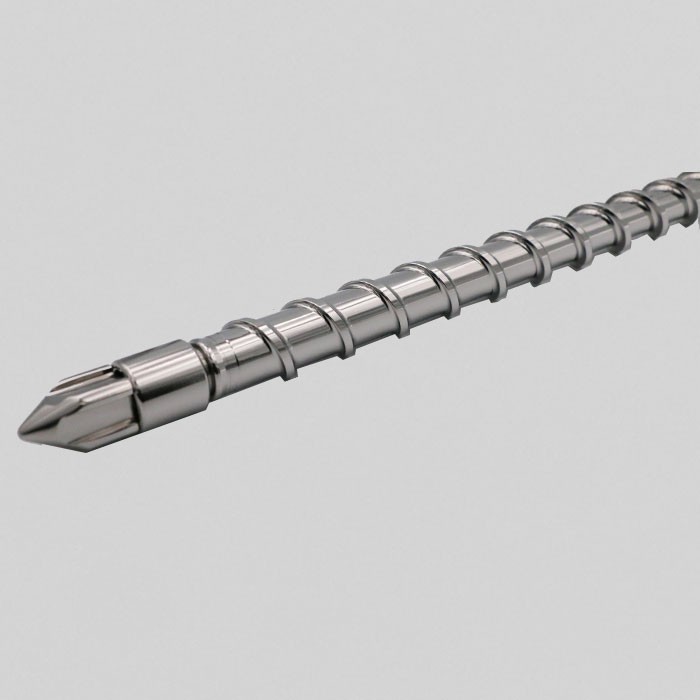

The advantage of bimetallic screws is that they combine the best of both worlds. The tough core provides the necessary strength to handle the high pressures during the injection molding process, while the wear - resistant outer layer protects the screw from the abrasive action of the plastic. This results in a longer service life and better performance. If you're interested in bimetallic screws, you can check out our Bimetallic Screw for Injection Molding Machine.
Fully Hardened Alloy
Fully hardened alloy screws are another option for those who need extreme durability. These screws are made from a special alloy that is heat - treated to achieve a high level of hardness throughout the entire screw.
The fully hardened alloy provides excellent wear resistance, making it ideal for molding abrasive plastics like glass - filled or fiber - filled polymers. These plastics can be really tough on screws, but fully hardened alloy screws can stand up to the challenge. If you're in the market for a screw that can handle the most demanding applications, take a look at our Fully Hardened Alloy Screw for Injection Molding Machine.
Sintered Hard Alloy
Sintered hard alloy is a high - performance material used in some of the most advanced injection molding screws. It's made by compacting and sintering metal powders under high pressure and temperature.
Sintered hard alloy screws have extremely high hardness and wear resistance. They can handle the most abrasive and high - temperature plastics with ease. These screws are often used in industries where precision and long - term performance are crucial, such as the automotive and aerospace industries. If you're looking for top - of - the - line performance, check out our Sintered Hard Alloy Screw for Injection Molding Machine.
Choosing the Right Material
So, how do you choose the right material for your injection molding screw? Well, it depends on several factors.
First, consider the type of plastic you'll be molding. If it's a non - abrasive, general - purpose plastic, carbon steel or alloy steel might be sufficient. But if you're working with abrasive or corrosive plastics, you'll need a more wear - resistant and corrosion - resistant material like bimetallic, fully hardened alloy, or sintered hard alloy.
Second, think about the operating conditions. High - pressure and high - temperature applications require screws with better mechanical properties. For example, if you're molding at very high temperatures, alloy steel or sintered hard alloy screws are better choices.
Finally, consider your budget. Different materials come with different price tags. Carbon steel is the most affordable, while sintered hard alloy is the most expensive. You need to find a balance between performance and cost.
Conclusion
In conclusion, there are several materials available for injection molding screws, each with its own advantages and disadvantages. As an injection molding screw supplier, we offer a wide range of options to meet your specific needs. Whether you're looking for a cost - effective carbon steel screw or a high - performance sintered hard alloy screw, we've got you covered.
If you're interested in purchasing injection molding screws or need more information about the materials, don't hesitate to contact us. We're here to help you find the perfect screw for your application. Let's have a chat and see how we can work together to improve your injection molding process.
References
- "Injection Molding Handbook" by O. Olabisi
- "Plastics Materials and Processing" by James F. Carley