

In the realm of injection moulding, every component plays a crucial role in ensuring the efficiency, quality, and precision of the manufacturing process. Among these components, the barrel's nozzle stands out as a key element that significantly impacts the overall performance of the injection moulding machine. As a leading supplier of barrels for injection moulding, I have witnessed firsthand the importance of the barrel's nozzle and its multifaceted role in this intricate process.
Understanding the Basics of Injection Moulding
Before delving into the role of the barrel's nozzle, it is essential to have a basic understanding of the injection moulding process. Injection moulding is a manufacturing technique used to produce plastic parts in large quantities. The process involves melting plastic pellets in a heated barrel and then injecting the molten plastic into a mould cavity under high pressure. Once the plastic cools and solidifies, the mould is opened, and the finished part is ejected.
The injection moulding machine consists of several key components, including the hopper, barrel, screw, nozzle, and mould. The hopper stores the plastic pellets, which are fed into the barrel. Inside the barrel, the screw rotates, conveying the plastic pellets forward while simultaneously melting them through frictional heat and external heating elements. The molten plastic is then forced through the nozzle and into the mould cavity.
The Role of the Barrel's Nozzle
The barrel's nozzle serves as the interface between the injection moulding machine and the mould. It plays several critical roles in the injection moulding process, including:
1. Controlling the Flow of Molten Plastic
One of the primary functions of the barrel's nozzle is to control the flow of molten plastic from the barrel into the mould cavity. The nozzle is designed with a specific orifice size and shape, which determines the rate and direction of the plastic flow. By adjusting the orifice size and shape, the nozzle can regulate the volume of plastic injected into the mould, ensuring that the part is filled evenly and completely.
In addition to controlling the flow rate, the nozzle also helps to maintain a consistent pressure during the injection process. This is important because variations in pressure can lead to defects in the finished part, such as voids, sink marks, or flash. The nozzle acts as a pressure regulator, ensuring that the molten plastic is injected into the mould at the correct pressure and velocity.
2. Sealing the Mould Cavity
Another important role of the barrel's nozzle is to seal the mould cavity during the injection process. The nozzle is designed to fit snugly against the sprue bushing of the mould, creating a tight seal that prevents the molten plastic from leaking out. This is crucial for maintaining the integrity of the mould and ensuring that the part is formed correctly.
A proper seal also helps to prevent air from entering the mould cavity, which can cause defects in the finished part. By creating a hermetic seal, the nozzle ensures that the molten plastic fills the mould cavity completely, resulting in a high-quality part with excellent surface finish.
3. Transferring Heat
The barrel's nozzle also plays a role in transferring heat from the barrel to the mould. During the injection process, the molten plastic is heated to a high temperature in the barrel. As the plastic passes through the nozzle, it comes into contact with the cooler mould surface, which causes it to start cooling and solidifying.
The nozzle is designed to have a high thermal conductivity, which allows it to transfer heat efficiently from the molten plastic to the mould. This helps to ensure that the plastic cools and solidifies at the correct rate, preventing defects such as warping or cracking.
4. Preventing Dripping
One of the challenges in injection moulding is preventing the molten plastic from dripping out of the nozzle when the injection process is not in progress. This can lead to waste, contamination, and damage to the mould. The barrel's nozzle is designed with features such as a shut-off valve or a non-return valve to prevent dripping.
A shut-off valve is a mechanical device that closes the nozzle when the injection process is complete, preventing the molten plastic from flowing out. A non-return valve, on the other hand, allows the plastic to flow in one direction only, preventing backflow and dripping.
Types of Barrel Nozzles
There are several types of barrel nozzles available, each designed for specific applications and requirements. Some of the most common types of barrel nozzles include:
1. Open Nozzles
Open nozzles are the simplest type of barrel nozzles. They have a straight or tapered orifice that allows the molten plastic to flow freely into the mould cavity. Open nozzles are suitable for applications where a high flow rate is required, such as large parts or parts with thin walls.
However, open nozzles are prone to dripping, especially when the injection process is stopped. To prevent dripping, open nozzles can be equipped with a shut-off valve or a non-return valve.
2. Shut-Off Nozzles
Shut-off nozzles are designed to prevent dripping by closing the nozzle when the injection process is complete. They typically have a mechanical or hydraulic mechanism that closes the orifice, preventing the molten plastic from flowing out. Shut-off nozzles are suitable for applications where precision and control are required, such as small parts or parts with complex geometries.
3. Thermal Nozzles
Thermal nozzles are designed to maintain a consistent temperature throughout the nozzle, ensuring that the molten plastic flows smoothly and evenly. They typically have a heating element or a cooling system that regulates the temperature of the nozzle. Thermal nozzles are suitable for applications where the plastic has a high viscosity or a narrow processing window.
4. Valve-Gated Nozzles
Valve-gated nozzles are a type of shut-off nozzle that uses a valve to control the flow of molten plastic. The valve can be opened and closed independently of the injection process, allowing for precise control of the plastic flow. Valve-gated nozzles are suitable for applications where multiple gates are required or where the plastic needs to be injected at different times or rates.
Choosing the Right Barrel Nozzle
Choosing the right barrel nozzle for your injection moulding application is crucial for achieving optimal results. When selecting a barrel nozzle, several factors need to be considered, including:
1. Part Geometry
The geometry of the part being moulded plays a significant role in determining the type of barrel nozzle required. For example, parts with thin walls or complex geometries may require a nozzle with a high flow rate and precise control, such as a shut-off nozzle or a valve-gated nozzle.
2. Plastic Material
The type of plastic material being used also affects the choice of barrel nozzle. Different plastics have different viscosities, melting points, and processing requirements. For example, high-viscosity plastics may require a nozzle with a larger orifice size and a higher flow rate, while low-viscosity plastics may require a nozzle with a smaller orifice size and a more precise control.

3. Mould Design
The design of the mould also influences the choice of barrel nozzle. The nozzle needs to be compatible with the sprue bushing of the mould and should be able to create a tight seal. In addition, the mould design may require multiple gates or a specific injection pattern, which may require a valve-gated nozzle or a multi-nozzle system.
4. Production Volume
The production volume is another important factor to consider when choosing a barrel nozzle. For high-volume production, a nozzle that is durable, reliable, and easy to maintain is essential. For low-volume production, a nozzle that offers flexibility and precision may be more suitable.
Our Products and Services
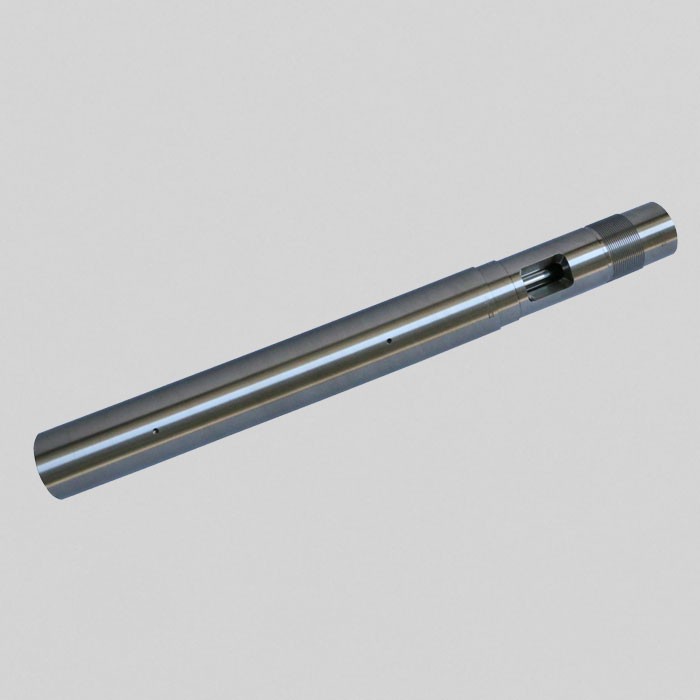
As a leading supplier of barrels for injection moulding, we offer a wide range of high-quality barrel nozzles to meet the diverse needs of our customers. Our products include Bimetallic Barrel for Injection Molding Machine, Plastic Injection Screw Barrel, and Screw Barrel Injection Molding Machine.
Our barrel nozzles are designed and manufactured using the latest technology and materials to ensure optimal performance and reliability. We offer a variety of nozzle types, including open nozzles, shut-off nozzles, thermal nozzles, and valve-gated nozzles, to meet the specific requirements of your injection moulding application.
In addition to our high-quality products, we also offer a range of services to support our customers. Our team of experienced engineers and technicians can provide technical support, installation, and maintenance services to ensure that your injection moulding machine is operating at peak performance.
Contact Us for Procurement and Consultation
If you are looking for a reliable supplier of barrel nozzles for your injection moulding application, look no further. We are committed to providing our customers with the highest quality products and services at competitive prices.
Whether you need a single barrel nozzle or a complete injection moulding system, we can help. Contact us today to discuss your requirements and to learn more about our products and services. We look forward to working with you to achieve your injection moulding goals.
References
- Throne, J. L. (2017). Plastics Rheology and Processing. CRC Press.
- Rosato, D. V., & Rosato, D. V. (2011). Injection Molding Handbook. Wiley.
- Osswald, T. A., & Turng, L. -S. (2007). Injection Molding Handbook. Hanser Publishers.