

Yo, what's up everyone! I'm a supplier of extrusion screw barrels, and today I wanna chat about the relationship between material viscosity and the performance of an extrusion screw barrel. It's a topic that's super important in our industry, and I've got some real - world insights to share.
First off, let's talk about what material viscosity actually is. In simple terms, viscosity is a measure of a fluid's resistance to flow. Think of honey and water. Honey has a high viscosity, so it flows very slowly. Water, on the other hand, has a low viscosity and flows easily. In the context of extrusion, the materials we deal with can have a wide range of viscosities, from really thin and runny to thick and sticky.
Now, how does this viscosity affect the performance of an extrusion screw barrel? Well, it all starts with the feeding process. When the material is fed into the extrusion screw barrel, the screw has to pick it up and convey it forward. If the material has a low viscosity, it's like trying to pick up water with a spoon. It can easily slip past the screw flights, and the feeding efficiency might be low. This can lead to inconsistent output and quality issues in the extruded product.
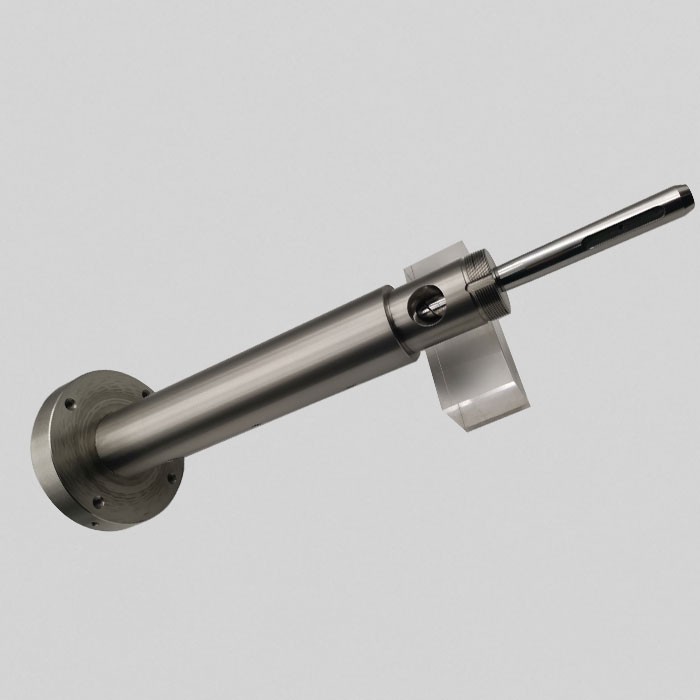

On the flip side, if the material has a high viscosity, it can be difficult to move at all. The screw has to work extra hard to push the thick material through the barrel. This can put a lot of stress on the screw and the barrel. Over time, it can cause wear and tear on the screw flights and the inner surface of the barrel. You might even end up with a blockage if the material gets too stuck.
Let's dig a bit deeper into how viscosity impacts the melting and mixing processes inside the extrusion screw barrel. When the material is heated inside the barrel, it starts to melt. Low - viscosity materials melt more quickly because they can absorb heat faster. They also mix more easily because they flow freely around the screw and can blend with additives and other components in the mixture.
However, high - viscosity materials take longer to melt. The heat transfer is slower because the thick material doesn't allow the heat to penetrate as easily. And when it comes to mixing, it's a real challenge. The screw has to use more energy to break up the clumps and distribute the additives evenly. This can result in unevenly mixed products, which is a big no - no in most applications.
The pressure build - up in the extrusion screw barrel is also affected by material viscosity. Low - viscosity materials don't build up much pressure because they flow so easily. This can be a problem if you need a certain pressure to shape the extruded product correctly. For example, in some plastic extrusion processes, you need enough pressure to push the plastic through a die to get the right shape.
High - viscosity materials, on the other hand, can build up a lot of pressure. This can be good in some cases, as it can help with shaping the product. But if the pressure gets too high, it can cause the barrel to leak or even damage the extrusion equipment. It's a delicate balance that we as suppliers have to help our customers manage.
Now, as a supplier of Extrusion Screw Barrel, I know how crucial it is to choose the right screw barrel for different material viscosities. For low - viscosity materials, we might recommend a screw with a shallower flight depth. This helps to increase the friction between the material and the screw, improving the feeding efficiency. The barrel might also need to have a smooth inner surface to reduce the chances of the material slipping.
For high - viscosity materials, a screw with a deeper flight depth can be more effective. It gives the screw more space to push the thick material forward. The barrel might need to be made of a more wear - resistant material because of the extra stress. We also offer barrels with special coatings that can reduce the friction and make it easier for the high - viscosity material to flow.
Another aspect to consider is the speed of the screw. For low - viscosity materials, a higher screw speed might be needed to improve the feeding and mixing. But for high - viscosity materials, a lower speed is often better. This allows the screw to apply more force without overheating the material or causing too much stress on the equipment.
We've also been working on some new designs for our Extruder Screw Barrel to better handle different viscosities. For example, we've developed screws with variable pitch. This means that the distance between the screw flights changes along the length of the screw. It can be adjusted to match the changing viscosity of the material as it melts and moves through the barrel.
In addition, our Extrusion Barrel designs now include better temperature control systems. This is important because temperature plays a big role in changing the viscosity of the material. By precisely controlling the temperature at different sections of the barrel, we can optimize the melting, mixing, and flow of the material.
If you're in the market for an extrusion screw barrel, it's really important to consider the viscosity of the materials you'll be using. Don't just go for the cheapest option or the one that looks the most impressive. Talk to us, and we can help you choose the right barrel and screw combination for your specific needs.
We've got a team of experts who have years of experience in dealing with different materials and viscosities. We can provide you with customized solutions that will improve the performance of your extrusion process and save you money in the long run. Whether you're working with low - viscosity polymers or high - viscosity elastomers, we've got you covered.
So, if you're interested in learning more about how our extrusion screw barrels can work for your materials, just reach out. We're always happy to have a chat and discuss your requirements. Let's work together to make your extrusion process more efficient and productive.
References
- "Plastics Extrusion Technology" by Allan A. Griff.
- "Extrusion Dies for Plastics and Rubber" by John A. Giles.