

The aspect ratio of an extruder barrel, defined as the ratio of its length to its diameter (L/D), is a critical parameter that significantly influences the processing of materials in extrusion operations. As a leading extruder barrel supplier, we understand the intricate relationship between the aspect ratio and various aspects of the extrusion process, and we are here to shed light on its effects.
Material Melting and Plasticization
One of the primary functions of an extruder barrel is to melt and plasticize the raw material. The aspect ratio plays a crucial role in this process. A higher L/D ratio provides a longer path for the material to travel through the barrel. This extended residence time allows for more efficient heat transfer from the barrel walls to the material. As a result, the material has more time to absorb heat, leading to better melting and plasticization.
For instance, in the extrusion of plastics, a higher aspect ratio barrel can ensure that the polymer chains are fully melted and homogenized. This is particularly important for high - performance plastics that require precise temperature control and thorough mixing. On the other hand, a lower L/D ratio may result in incomplete melting, leading to uneven product quality, such as streaks or lumps in the extruded product.
Mixing and Homogenization
Mixing is another essential aspect of the extrusion process. It involves blending different additives, fillers, and polymers to achieve a uniform composition. The aspect ratio of the extruder barrel affects the mixing efficiency. A longer barrel provides more opportunities for the material to be sheared and mixed.
The screw inside the barrel creates a complex flow pattern that promotes mixing. With a higher L/D ratio, the material experiences more shearing actions as it moves along the barrel. This helps to disperse additives evenly throughout the polymer matrix, enhancing the overall quality and performance of the extruded product. For example, in the production of filled plastics, a higher aspect ratio barrel can ensure that the fillers are well - distributed, improving the mechanical properties of the final product.
Pressure Generation
Pressure generation is vital for forcing the molten material through the die to form the desired shape. The aspect ratio of the extruder barrel influences the pressure build - up within the barrel. A longer barrel generally allows for better pressure generation.
As the material moves through the barrel, the screw compresses it, creating pressure. With a higher L/D ratio, there is more contact between the screw and the material, resulting in increased frictional forces and better pressure build - up. This is crucial for extrusion processes that require high pressures, such as in the production of pipes or profiles with complex geometries. A lower aspect ratio barrel may struggle to generate sufficient pressure, leading to issues such as poor die filling and inconsistent product dimensions.
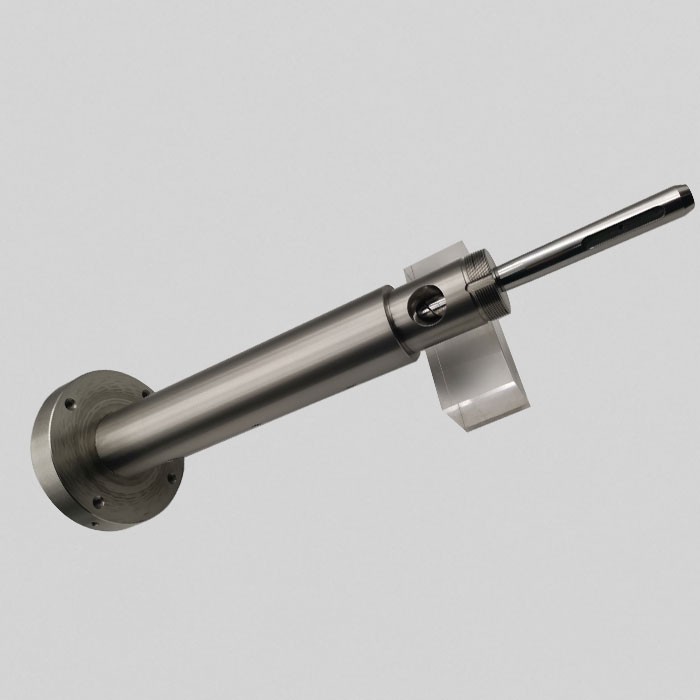

Energy Consumption
The aspect ratio of the extruder barrel also has an impact on energy consumption. A higher L/D ratio may require more energy to operate. This is because a longer barrel means more surface area for heat transfer and more material to be processed. The motor has to work harder to drive the screw through the longer length of the barrel, increasing the power consumption.
However, it's important to note that in some cases, the improved processing efficiency associated with a higher L/D ratio can offset the increased energy consumption. For example, better melting and mixing can lead to higher product quality, reducing the need for rework and waste. Additionally, advanced screw designs and barrel heating systems can help to optimize energy usage in high - aspect - ratio barrels.
Productivity
Productivity is a key consideration in any extrusion operation. The aspect ratio of the extruder barrel can affect the production rate. A higher L/D ratio may allow for higher throughput in some cases. This is because the better melting, mixing, and pressure generation capabilities of a longer barrel can enable the extruder to process more material per unit time.
However, there are also limitations. A very high L/D ratio may increase the residence time of the material to the point where it can cause thermal degradation, especially for heat - sensitive materials. Therefore, finding the optimal aspect ratio for a specific application is crucial to balance productivity and product quality.
Applications and Suitable Aspect Ratios
Different applications require different aspect ratios of the extruder barrel. For simple extrusion processes, such as the production of thin films or sheets, a lower L/D ratio (e.g., 15:1 - 20:1) may be sufficient. These applications typically involve less complex materials and do not require extensive mixing or high pressures.
For more complex applications, such as the production of engineering plastics or composites, a higher L/D ratio (e.g., 30:1 - 40:1 or even higher) is often necessary. These materials require better melting, mixing, and pressure generation to achieve the desired properties. For example, in the production of automotive parts made from high - performance plastics, a high - aspect - ratio barrel can ensure that the material is fully plasticized and homogenized, resulting in parts with excellent mechanical and thermal properties.
Our Offerings
As an extruder barrel supplier, we offer a wide range of barrels with different aspect ratios to meet the diverse needs of our customers. Our Plastic Extruder Screw Barrel is designed for the extrusion of various plastics, with aspect ratios tailored to different plastic types and processing requirements. Our Extruder Bimetallic Barrel provides excellent wear resistance and heat transfer properties, suitable for high - volume and high - pressure extrusion processes. And our Extrusion Screw Barrel is engineered to ensure efficient melting, mixing, and pressure generation, enabling optimal processing performance.
Conclusion
The aspect ratio of an extruder barrel has a profound impact on the processing of materials in extrusion operations. It affects material melting, mixing, pressure generation, energy consumption, productivity, and ultimately, the quality of the extruded product. As a professional extruder barrel supplier, we are committed to providing our customers with barrels of the right aspect ratio for their specific applications. Whether you are looking for a barrel for simple plastic extrusion or complex composite processing, we have the expertise and products to meet your needs.
If you are interested in our extruder barrels or have any questions about the aspect ratio and its impact on your extrusion process, please feel free to contact us for a detailed discussion and procurement negotiation. We look forward to working with you to achieve optimal extrusion results.
References
- Tadmor, Z., & Gogos, C. G. (2006). Principles of Polymer Processing. Wiley - Interscience.
- White, J. L., & Potente, H. (2003). Handbook of Polymer Extrusion Technology. Hanser Publishers.
- Rauwendaal, C. (2014). Polymer Extrusion. Hanser Gardner Publications.