

Hey there! As a supplier of extrusion barrels, I've got a ton of knowledge about these nifty pieces of equipment. In this blog, I'm gonna break down the different types of extrusion barrels, so you can have a better understanding of what's out there and which one might be right for your needs.
Single-Screw Extrusion Barrels
Let's start with the single - screw extrusion barrels. These are probably the most common type you'll come across. A single - screw extrusion barrel works with a single screw that rotates inside it. The screw is like a conveyor belt on steroids. It grabs the raw material, usually in the form of pellets or powder, at the feed end and pushes it forward through the barrel.
As the material moves along, it goes through different zones. There's the feed zone, where the material first enters and gets a good grip from the screw. Then comes the compression zone, where the screw's flight depth decreases, squeezing the material and increasing its pressure. Finally, there's the metering zone, where the material is homogenized and prepared to be pushed out of the die.
Single - screw extrusion barrels are great for a wide range of applications. They're used in making things like plastic pipes, sheets, and films. They're relatively simple in design, which makes them cost - effective and easy to maintain. If you're looking for a reliable workhorse for general extrusion tasks, a single - screw extrusion barrel might be your best bet. Check out our Extrusion Screw Barrel for more details on our single - screw options.
Twin - Screw Extrusion Barrels
Now, let's talk about twin - screw extrusion barrels. These have two screws rotating inside the barrel, and they can rotate in the same direction (co - rotating) or in opposite directions (counter - rotating).
Co - rotating twin - screw extrusion barrels are really good at mixing and compounding. The two screws intermesh, which allows for intense mixing of different materials. This makes them ideal for applications where you need to blend multiple polymers, add fillers, or incorporate additives. For example, in the production of high - performance plastics with special properties like flame retardancy or enhanced strength.
Counter - rotating twin - screw extrusion barrels, on the other hand, are more about conveying and pressure generation. They can handle materials with high viscosities and are often used in processes like PVC extrusion. The counter - rotation creates a strong pumping action, pushing the material through the barrel efficiently.

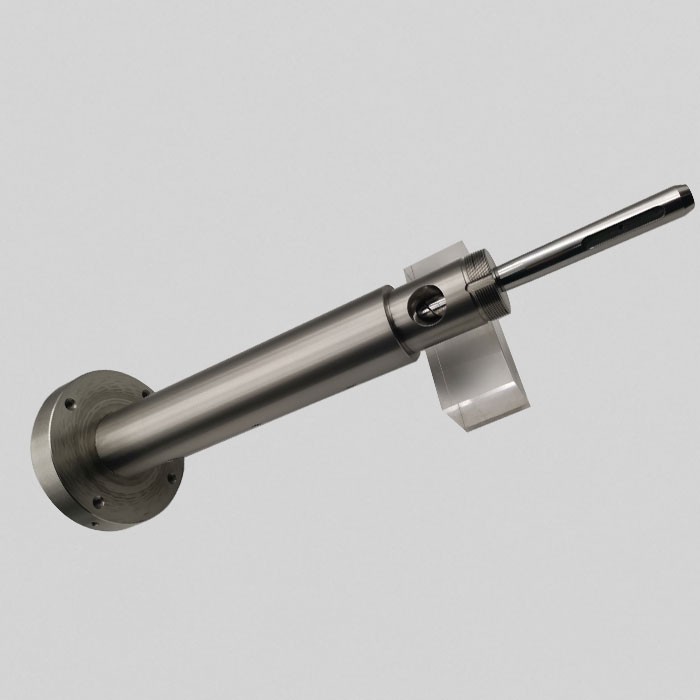
Twin - screw extrusion barrels are more complex than single - screw ones, but they offer a lot more flexibility and performance. If you're working on more advanced extrusion projects that require precise control over the material properties, a twin - screw extrusion barrel could be the way to go. You can find more information about our twin - screw options in our Extruder Screw Barrel section.
Co - Extrusion Barrels
Co - extrusion barrels are a bit of a specialty. Instead of just processing one type of material, they can handle multiple materials at the same time. This allows you to create products with multiple layers, each with different properties.
For example, in the packaging industry, co - extrusion can be used to make plastic films with an outer layer that's tough and resistant to scratches, and an inner layer that's good at sealing. In the pipe industry, you can have a pipe with an inner layer that's resistant to chemicals and an outer layer that's strong and durable.
Co - extrusion barrels have separate channels for each material, and the materials are combined at the die. This requires precise control over the flow rates and temperatures of each material to ensure a uniform and high - quality product. If you're interested in creating multi - layer products, take a look at our Barrel in Extruder options for co - extrusion.
Cold Feed Extrusion Barrels
Cold feed extrusion barrels are designed to process materials at lower temperatures. The raw material is fed into the barrel in a cold state, usually in the form of rubber or some thermoplastics.
The advantage of cold feed extrusion is that it can save energy because you don't have to heat the material as much before processing. It's also good for materials that are sensitive to high temperatures, as it reduces the risk of degradation. Cold feed extrusion barrels are commonly used in the rubber industry for making things like tires, hoses, and seals.
Hot Feed Extrusion Barrels
In contrast to cold feed, hot feed extrusion barrels require the material to be pre - heated before entering the barrel. This is often the case with materials that have a high viscosity and need to be in a more fluid state to be processed easily.
Hot feed extrusion barrels are typically used for materials like certain types of thermosetting plastics. The pre - heating helps to reduce the resistance of the material as it moves through the barrel, allowing for a more efficient extrusion process.
Choosing the Right Extrusion Barrel
So, how do you choose the right extrusion barrel for your business? Well, it all depends on your application. If you're doing simple, high - volume production of single - layer products, a single - screw extrusion barrel might be sufficient. But if you need to mix different materials or create multi - layer products, you'll probably want to look at twin - screw or co - extrusion barrels.
You also need to consider the type of material you're working with. Some materials are better suited for cold feed extrusion, while others require hot feed. And of course, your budget and production capacity are important factors too.
Contact Us for Your Extrusion Barrel Needs
If you're still not sure which type of extrusion barrel is right for you, don't worry! We're here to help. As an experienced extrusion barrel supplier, we've got the expertise to guide you through the selection process. Whether you need a single - screw barrel for your small - scale operation or a high - end twin - screw barrel for a large - scale production line, we can provide you with the best solutions.
Just reach out to us, and we'll have a detailed discussion about your requirements. We'll work with you to find the perfect extrusion barrel that meets your needs and fits your budget. Let's start this journey together and take your extrusion business to the next level.
References
- "Plastics Extrusion Technology Handbook" by Allan A. Griff.
- "Extrusion of Polymers: Theory and Practice" by John A. Mallouk.