

Hey there! As a supplier of extrusion screw barrels, I've seen firsthand how the feeding rate can have a huge impact on both the output and quality of these essential components. In this blog post, I'm going to break down the relationship between feeding rate and the performance of extrusion screw barrels, and why it's so important to get it right.
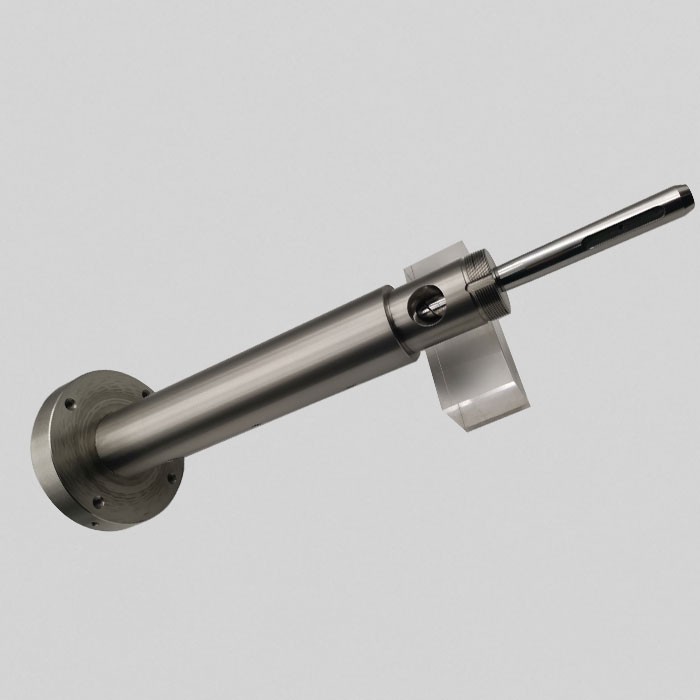
Let's start by understanding what an extrusion screw barrel is. If you're new to this, you can check out Extrusion Screw Barrel for a more detailed explanation. Essentially, it's a key part of an extrusion machine. The screw rotates inside the barrel, and this action helps to convey, melt, and mix the raw materials before pushing them out through a die to create the final product.
How Feeding Rate Affects Output
The feeding rate is all about how much raw material you're putting into the extrusion screw barrel per unit of time. It's like filling up a car's gas tank - if you pour in too little gas, the car won't go very far; if you pour in too much too fast, it might spill.
When it comes to extrusion, a low feeding rate means that there's not enough material going into the barrel. This leads to lower output because the screw doesn't have enough stuff to work with. The machine is running, but it's not producing as much as it could. Imagine a factory that's supposed to make a thousand plastic pipes a day. If the feeding rate is too low, they might only manage to make a few hundred. This is a big problem for businesses that rely on high - volume production to make a profit.
On the other hand, if the feeding rate is too high, the screw barrel can get overloaded. The screw might not be able to handle all the material at once, causing blockages or jams. This can lead to downtime as the machine has to be stopped and cleared. And even if the machine doesn't jam completely, an overly high feeding rate can cause the output to be inconsistent. Some parts of the extruded product might be thicker or thinner than others, which is a major quality issue.
Impact on Quality
Quality is just as important as output, and the feeding rate plays a crucial role here too.
One of the main quality factors affected by the feeding rate is the uniformity of the extruded product. When the feeding rate is stable and appropriate, the screw can mix and melt the raw material evenly. This results in a product with consistent density, thickness, and other physical properties. For example, if you're making plastic sheets, a proper feeding rate ensures that the sheet has the same thickness from one end to the other.
But when the feeding rate is off, things go wrong. A fluctuating feeding rate can cause variations in the melting and mixing process. Some parts of the material might not be melted enough, while others might be over - melted. This can lead to visible defects in the final product, like bubbles, streaks, or uneven surfaces. These defects not only make the product look bad but can also affect its functionality.

Another aspect of quality is the mechanical properties of the extruded product. If the feeding rate is too high, the material might not have enough time to be properly mixed and homogenized. This can result in a product with weaker mechanical strength. For instance, a plastic pipe made with an improper feeding rate might be more likely to break under pressure.
Controlling the Feeding Rate
So, how do you control the feeding rate to optimize both output and quality?
First, it's important to understand the capabilities of your extrusion screw barrel. Different screw barrels have different capacities and optimal feeding rates. You need to refer to the manufacturer's specifications to get an idea of the ideal range.
There are also various feeding systems available that can help you control the rate more precisely. Some use volumetric feeding, where the amount of material fed is measured by volume. Others use gravimetric feeding, which measures the weight of the material. Gravimetric feeding is generally more accurate as it takes into account the density variations of the raw material.
Temperature control also plays a role in feeding rate management. You can learn more about this by visiting Extruder Barrel Temperature Control. If the barrel temperature is too high, the material might become too fluid, and it can be difficult to control the feeding rate. On the other hand, if the temperature is too low, the material might not flow properly, affecting the feeding process.
Finding the Sweet Spot
Finding the right feeding rate is like finding the sweet spot in a game. It requires some trial and error. You start by setting the feeding rate based on the manufacturer's recommendations and then make small adjustments based on the output and quality of the extruded product.
You can use sensors and monitoring systems to keep track of the feeding rate and other process parameters. These systems can provide real - time data, allowing you to make quick adjustments if something goes wrong.
Conclusion
In conclusion, the feeding rate has a profound impact on both the output and quality of an extrusion screw barrel. A proper feeding rate ensures high - volume production without sacrificing the quality of the final product. As a supplier of extrusion screw barrels, I've seen many customers struggle with getting the feeding rate right. But with the right knowledge, equipment, and a bit of experimentation, it's definitely achievable.
If you're in the market for a high - quality extrusion screw barrel or need more advice on optimizing your extrusion process, don't hesitate to reach out. We're here to help you get the most out of your extrusion operations. Contact us to start a conversation about your specific needs and how we can assist you in achieving the best results.
References
- Smith, J. (2018). Extrusion Technology Handbook. Publisher X.
- Johnson, M. (2020). Quality Control in Extrusion Processes. Journal of Manufacturing Science, Vol. 15, Issue 2.