

The extrusion process is a fundamental manufacturing technique used across a wide range of industries, from plastics and rubber to food and pharmaceuticals. At the heart of this process lies the extruder screw barrel, a critical component that significantly influences the efficiency and quality of extrusion. As a leading extruder screw barrel supplier, I've witnessed firsthand how the diameter of the screw barrel can have a profound impact on the extrusion process. In this blog, I'll delve into the details of how screw barrel diameter affects various aspects of extrusion, including output rate, mixing quality, and product consistency.
Output Rate
One of the most obvious ways in which the diameter of an extruder screw barrel affects the extrusion process is through its impact on the output rate. Simply put, a larger diameter screw barrel can accommodate more material, allowing for a higher volume of product to be extruded per unit of time. This is because the cross-sectional area of the screw barrel increases with the square of the diameter. For example, if you double the diameter of the screw barrel, the cross-sectional area increases by a factor of four.
However, it's important to note that increasing the diameter of the screw barrel doesn't always result in a proportional increase in output rate. Other factors, such as screw speed, material properties, and barrel temperature, also play a crucial role. For instance, if the screw speed is too high, the material may not have enough time to melt and mix properly, leading to poor product quality. On the other hand, if the barrel temperature is too low, the material may not flow smoothly through the barrel, reducing the output rate.
As a supplier, we understand the importance of finding the right balance between screw barrel diameter and other extrusion parameters to achieve optimal output rates. Our team of experts can work with you to select the appropriate screw barrel diameter based on your specific production requirements and material characteristics. We also offer a range of Extruder Bimetallic Barrel options, which are designed to provide excellent wear resistance and corrosion protection, ensuring long-lasting performance and high output rates.
Mixing Quality
Another key aspect of the extrusion process is the mixing quality of the material. Proper mixing is essential to ensure that the final product has consistent properties and meets the required specifications. The diameter of the screw barrel can have a significant impact on the mixing quality, as it affects the residence time of the material in the barrel and the shear forces applied to the material.
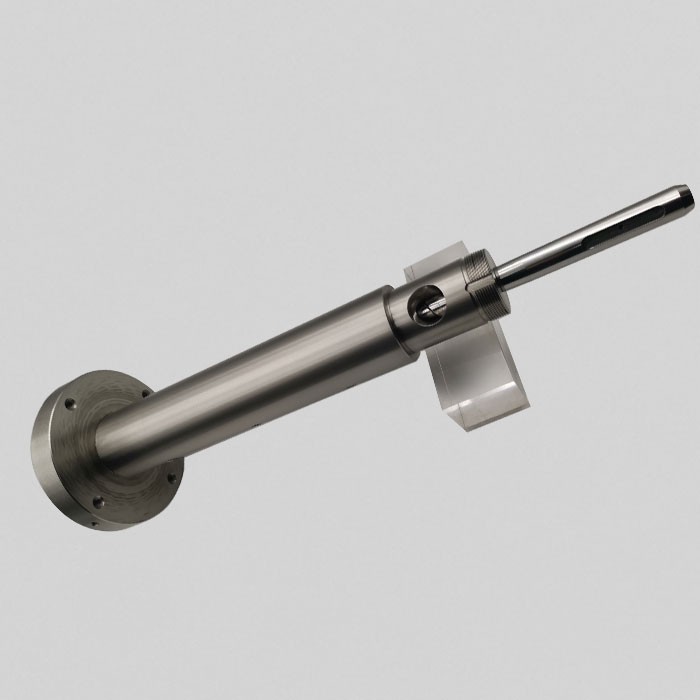

In general, a larger diameter screw barrel provides a longer residence time for the material, allowing for more thorough mixing. This is because the material has more space to spread out and interact with the screw flights, increasing the chances of achieving a homogeneous mixture. Additionally, a larger diameter screw barrel can generate higher shear forces, which can help to break down agglomerates and disperse additives more effectively.
However, increasing the diameter of the screw barrel also has its limitations. If the diameter is too large, the shear forces may become too low, resulting in poor mixing. Moreover, a larger diameter screw barrel may require a higher screw speed to maintain the same output rate, which can increase the risk of overheating the material and causing degradation.
To ensure optimal mixing quality, it's important to choose the right screw barrel diameter and design based on the specific material and application. Our company offers a wide range of screw barrel designs, including single-screw and twin-screw extruders, which can be customized to meet your specific mixing requirements. We also provide Extruder Barrel Temperature Control solutions, which can help to maintain the temperature of the material within the optimal range and prevent overheating.
Product Consistency
Product consistency is a critical factor in the extrusion process, as it directly affects the quality and performance of the final product. The diameter of the screw barrel can have a significant impact on product consistency, as it influences the pressure distribution and flow characteristics of the material in the barrel.
A larger diameter screw barrel can provide a more uniform pressure distribution, which helps to ensure that the material flows smoothly through the barrel and exits the die with consistent dimensions and properties. This is because the larger cross-sectional area of the barrel reduces the pressure drop along the length of the barrel, minimizing the variations in flow rate and pressure.
In addition, a larger diameter screw barrel can also improve the melt quality of the material, which is essential for achieving consistent product properties. By providing a longer residence time and higher shear forces, a larger diameter screw barrel can help to ensure that the material is fully melted and homogenized before it exits the die.
However, it's important to note that achieving product consistency requires more than just choosing the right screw barrel diameter. Other factors, such as screw design, barrel temperature, and die design, also play a crucial role. Our team of experts can work with you to optimize the entire extrusion process, from material selection to die design, to ensure that you achieve the highest level of product consistency.
Considerations for Choosing the Right Screw Barrel Diameter
When choosing the right screw barrel diameter for your extrusion process, there are several factors that you need to consider. These include:
- Production Requirements: The output rate and production volume requirements of your process will play a major role in determining the appropriate screw barrel diameter. If you need to produce a large volume of product per unit of time, a larger diameter screw barrel may be necessary.
- Material Properties: The properties of the material being extruded, such as viscosity, melting point, and shear sensitivity, will also affect the choice of screw barrel diameter. For example, materials with high viscosity may require a larger diameter screw barrel to ensure proper flow and mixing.
- Product Specifications: The final product specifications, such as dimensions, properties, and quality requirements, will also influence the choice of screw barrel diameter. For instance, if you need to produce a product with tight tolerances, a smaller diameter screw barrel may be more suitable.
- Cost Considerations: The cost of the screw barrel and the overall extrusion system is also an important factor to consider. A larger diameter screw barrel may be more expensive, but it may also provide higher output rates and better product quality, which can result in cost savings in the long run.
As a supplier, we understand that choosing the right screw barrel diameter can be a complex decision. That's why we offer a comprehensive range of products and services to help you make an informed choice. Our team of experts can provide you with detailed technical advice and support, and we can also offer customized solutions to meet your specific requirements.
Conclusion
In conclusion, the diameter of the extruder screw barrel plays a crucial role in the extrusion process, affecting the output rate, mixing quality, and product consistency. As a leading extruder screw barrel supplier, we have the expertise and experience to help you choose the right screw barrel diameter for your specific application. Whether you're looking for a standard or custom solution, we can provide you with high-quality products and excellent customer service.
If you're interested in learning more about our extruder screw barrels or would like to discuss your specific requirements, please don't hesitate to contact us. We look forward to working with you to achieve your extrusion goals.
References
- Tadmor, Z., & Gogos, C. G. (2006). Principles of Polymer Processing. John Wiley & Sons.
- Rauwendaal, C. (2014). Polymer Extrusion. Hanser Publishers.
- Menges, G., Michaeli, W., & Mohren, K. (2009). Plastics Processing: An Introduction. Hanser Publishers.