

Hey there! As a supplier of halogen-free screws, I often get asked a bunch of questions about these little but crucial components. One question that pops up quite frequently is, "Do halogen-free screws expand or contract with temperature changes?" Well, let's dive right into it and find out.
First off, let's understand what halogen-free screws are. Halogen-free screws are made without the use of halogens, which are a group of elements including fluorine, chlorine, bromine, iodine, and astatine. These screws are becoming more and more popular because they're environmentally friendly. They don't release toxic gases when burned, which is a huge plus, especially in industries where safety and environmental regulations are super strict.
Now, back to the main question: how do these screws react to temperature changes? Like most materials, halogen-free screws do expand and contract with temperature variations. This phenomenon is known as thermal expansion and contraction.
Thermal expansion occurs when a material is heated. The molecules in the material start to move more vigorously and take up more space, causing the material to expand. On the other hand, when the material is cooled, the molecules slow down and get closer together, leading to contraction.
The degree of expansion or contraction depends on a few factors. One of the most important factors is the coefficient of thermal expansion (CTE) of the material. The CTE is a measure of how much a material expands or contracts per unit length for a given change in temperature. Different materials have different CTEs. For example, metals generally have higher CTEs compared to ceramics.
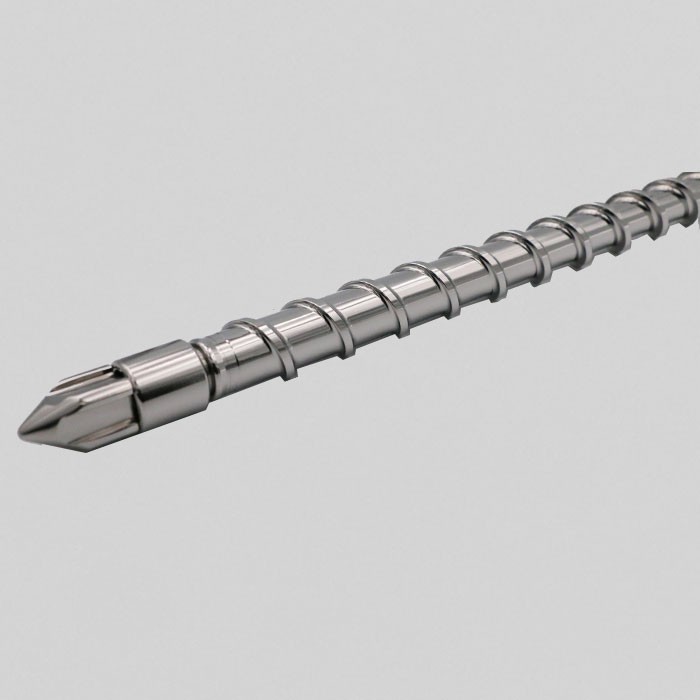

Halogen-free screws can be made from a variety of materials, such as stainless steel, brass, or plastic. Each of these materials has its own CTE. Stainless steel, for instance, has a relatively high CTE. So, when a stainless steel halogen-free screw is exposed to a significant temperature increase, it will expand more compared to a screw made from a material with a lower CTE.
This expansion and contraction can have some real implications in practical applications. In some precision engineering projects, even a tiny amount of expansion or contraction can throw off the whole system. For example, in an electronic device, if a halogen-free screw expands too much due to heat generated by the components, it could cause misalignment or even damage to the internal parts.
On the flip side, in some applications, the thermal expansion and contraction of halogen-free screws can actually be beneficial. In a structure that experiences temperature fluctuations, the screws can adjust their length slightly to accommodate the changes, preventing stress build-up and potential damage to the structure.
Let's take a look at some specific types of halogen-free screws and how they might behave. If you're in the injection molding industry, you might be interested in Bimetallic Screw for Injection Molding Machine. These screws are designed to withstand high temperatures and pressures during the injection molding process. The bimetallic design, which combines two different metals with different CTEs, can help to optimize the performance of the screw under varying temperature conditions.
Another option is the Fully Hardened Alloy Screw for Injection Molding Machine. These screws are made from a fully hardened alloy, which gives them excellent strength and wear resistance. The alloy's CTE will determine how it expands and contracts with temperature changes, and this can be an important consideration when choosing the right screw for your injection molding needs.
There's also the Sintered Hard Alloy Screw for Injection Molding Machine. Sintered hard alloy screws are known for their high hardness and toughness. Similar to the other types of screws, their thermal behavior is influenced by the CTE of the sintered hard alloy material.
So, how can you deal with the thermal expansion and contraction of halogen-free screws in your projects? One approach is to choose the right material for the screw based on the expected temperature range. If the application will be exposed to high temperatures, you might want to select a material with a lower CTE to minimize expansion.
Another strategy is to design the system with some flexibility to accommodate the expansion and contraction. This could involve leaving some clearance around the screw or using flexible components in the assembly.
In conclusion, halogen-free screws do expand and contract with temperature changes, just like any other material. Understanding the thermal behavior of these screws is crucial for ensuring the reliability and performance of your projects. Whether you're in the injection molding industry or any other field that uses screws, choosing the right halogen-free screw and taking appropriate measures to deal with thermal expansion and contraction can make a big difference.
If you're interested in learning more about our halogen-free screws or have any questions about how they can work for your specific application, don't hesitate to reach out. We're here to help you find the perfect solution for your needs. Let's start a conversation and see how we can collaborate to make your projects a success.
References
- "Materials Science and Engineering: An Introduction" by William D. Callister Jr. and David G. Rethwisch
- "Engineering Thermodynamics" by Yunus A. Cengel and Michael A. Boles