

The length - to - diameter ratio (L/D ratio) of a plastic injection screw barrel is a critical parameter that significantly impacts the performance of plastic injection molding processes. As a plastic injection screw barrel supplier, we have witnessed firsthand how the right L/D ratio can optimize production efficiency, product quality, and cost - effectiveness. In this blog, we will delve into the concept of the optimal L/D ratio for a plastic injection screw barrel and explore the factors that influence this crucial metric.
Understanding the Length - to - Diameter Ratio
The L/D ratio is calculated by dividing the length of the screw barrel by its diameter. For example, if a screw barrel has a length of 1000 mm and a diameter of 200 mm, the L/D ratio is 5 (1000/200). This ratio plays a fundamental role in determining how well the screw barrel can perform tasks such as melting, mixing, and conveying plastic materials.
A higher L/D ratio generally means more surface area for heat transfer and more time for the plastic to be mixed and melted. This can result in better plasticization, which is the process of converting solid plastic pellets into a homogeneous, molten state. On the other hand, a lower L/D ratio may lead to faster throughput but potentially less thorough plasticization.
Factors Influencing the Optimal L/D Ratio
Plastic Material Properties
Different plastic materials have varying melting points, viscosities, and thermal conductivities. For example, high - density polyethylene (HDPE) has a relatively low melting point and good flow properties, while polycarbonate (PC) has a higher melting point and is more viscous. Materials with high melting points and poor flow characteristics often require a higher L/D ratio to ensure complete melting and proper mixing. A screw barrel with a higher L/D ratio provides more residence time for the plastic to absorb heat and reach a uniform molten state.
Molding Process Requirements
The type of molding process also affects the optimal L/D ratio. For precision molding applications, such as the production of medical devices or electronic components, a higher L/D ratio is often preferred. This is because these applications demand a high level of plastic homogeneity and consistency to ensure the quality and performance of the final product. In contrast, for high - volume, less - precise molding, such as the production of disposable plastic items, a lower L/D ratio may be sufficient to achieve the required throughput.
Machine Design and Capacity
The design and capacity of the injection molding machine play a role in determining the appropriate L/D ratio. Smaller machines may have limitations on the length of the screw barrel due to space constraints. In such cases, a lower L/D ratio may be used, but the machine may need to be optimized in other ways, such as using a more powerful heating system or a specialized screw design. Larger machines, on the other hand, can accommodate longer screw barrels and may benefit from a higher L/D ratio to enhance plasticization and production efficiency.
Typical Ranges of L/D Ratios
In general, L/D ratios for plastic injection screw barrels can range from as low as 15:1 to as high as 30:1 or more.
- Low L/D Ratios (15:1 - 20:1): These are suitable for materials that are easy to melt and process, such as some types of polyolefins. Low L/D ratio screw barrels offer fast throughput, which is ideal for high - volume production where the focus is on speed rather than extreme precision. They also tend to be more cost - effective in terms of initial investment and energy consumption.
- Medium L/D Ratios (20:1 - 25:1): This range is a common choice for a wide variety of plastic materials and molding applications. It provides a good balance between plasticization quality and throughput. Many standard injection molding operations, including the production of consumer goods and automotive parts, can benefit from a medium L/D ratio.
- High L/D Ratios (25:1 - 30:1+): High L/D ratios are used for challenging materials or applications that require exceptional plasticization. Materials like engineering plastics, which have high melting points and complex molecular structures, often need the extra length to ensure complete melting and mixing. High - precision molding processes, such as optical lens production, also rely on high L/D ratio screw barrels to achieve the required level of quality.
Our Product Offerings
As a plastic injection screw barrel supplier, we offer a wide range of screw barrels with different L/D ratios to meet the diverse needs of our customers. Our Plastic Injection Screw Barrel products are designed and manufactured with the highest quality standards. We use advanced materials and manufacturing techniques to ensure the durability and performance of our screw barrels.

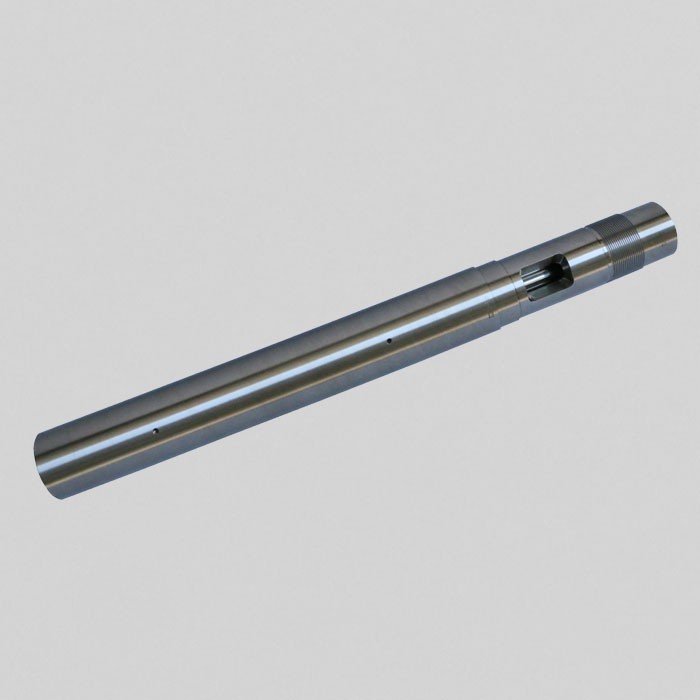
For customers dealing with high - performance plastics, our Sintered Hard Alloy Barrel for Injection Molding Machine is an excellent choice. These barrels are made from sintered hard alloy, which offers superior wear resistance and heat transfer properties. They can withstand the high pressures and temperatures associated with processing difficult materials, even with high L/D ratios.
Our Injection Screw Barrel products are available in various L/D ratios, and we can also customize the design according to your specific requirements. Whether you need a low L/D ratio for high - speed production or a high L/D ratio for precision molding, we have the expertise and resources to provide you with the right solution.
Conclusion
Determining the optimal length - to - diameter ratio for a plastic injection screw barrel is a complex process that requires careful consideration of multiple factors, including plastic material properties, molding process requirements, and machine design. By understanding these factors and working with a reliable supplier, you can select the right screw barrel with the appropriate L/D ratio to optimize your injection molding operations.
If you are in the market for a plastic injection screw barrel and need assistance in choosing the optimal L/D ratio for your application, we encourage you to contact us. Our team of experts is ready to provide you with professional advice and support. We look forward to the opportunity to work with you and help you achieve the best results in your plastic injection molding processes.
References
- Beaumont, J. P. (2007). Injection Molding Handbook. Hanser Gardner Publications.
- Rosato, D. V., Rosato, D. V., & Menges, G. (2000). Injection Molding Handbook. Kluwer Academic Publishers.
- Throne, J. L. (1996). Plastics Process Engineering. Marcel Dekker.