

In the realm of plastic processing and extrusion, the extruder screw barrel stands as a pivotal component. As a trusted Extruder Screw Barrel supplier, I've witnessed firsthand the profound impact of various factors on the performance of these systems. One such crucial factor is the screw diameter, which significantly influences the output capacity of an extruder screw barrel.
Understanding the Basics of Extruder Screw Barrels
Before delving into the influence of screw diameter on output capacity, it's essential to understand the fundamental role of an extruder screw barrel. An Extruder Screw Barrel is the heart of an extrusion machine. It consists of a screw that rotates within a barrel, performing multiple functions such as conveying, melting, mixing, and pumping the plastic material. The screw's design and the barrel's configuration are carefully engineered to ensure efficient processing of different types of polymers.
There are different types of extruder screw barrels, such as the Single Screw Extruder Screw Barrel and twin-screw extruder screw barrels. Single screw extruders are commonly used for simple extrusion processes, while twin-screw extruders are preferred for more complex applications that require better mixing and higher throughput.
The Relationship between Screw Diameter and Output Capacity
The output capacity of an extruder screw barrel refers to the amount of plastic material that can be processed and extruded within a given time frame. The screw diameter plays a crucial role in determining this output capacity.
1. Volumetric Flow Rate
The volumetric flow rate of the plastic material through the extruder is directly related to the screw diameter. A larger screw diameter means a larger cross - sectional area of the screw channel. According to the principles of fluid mechanics, the volumetric flow rate (Q) is proportional to the cross - sectional area (A) of the flow path. Mathematically, Q = A × v, where v is the average velocity of the plastic material.
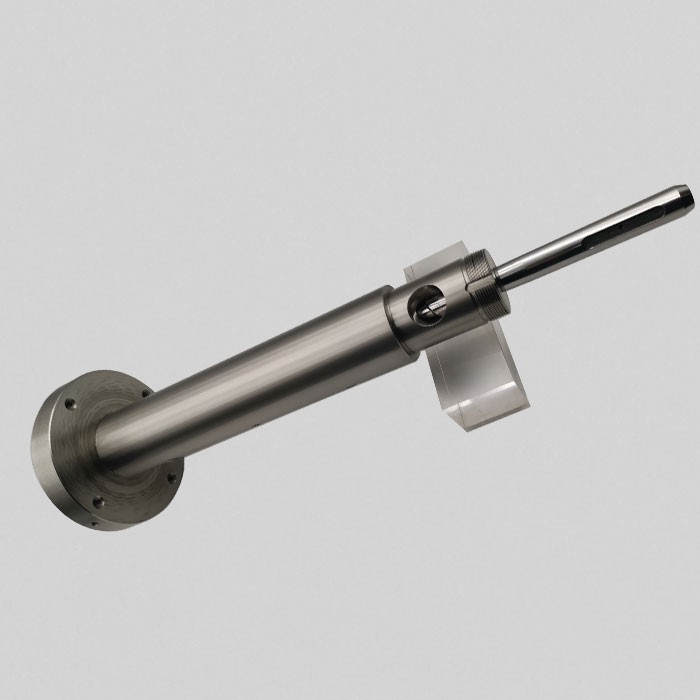
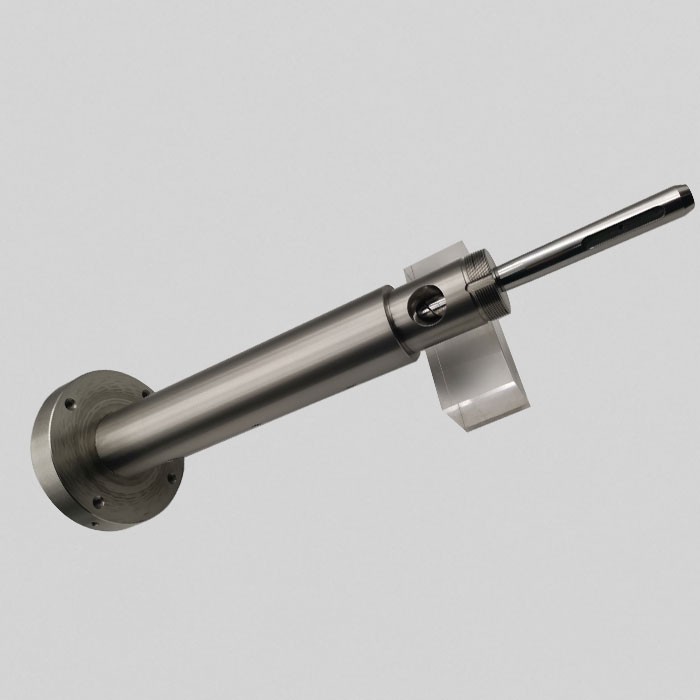
As the screw diameter increases, the cross - sectional area of the screw channel increases quadratically. For example, if the screw diameter is doubled, the cross - sectional area of the screw channel increases by a factor of four (since A = πr², where r is the radius of the screw). This allows for a greater volume of plastic material to be conveyed through the extruder per unit time, resulting in a higher output capacity.
2. Melting and Mixing Efficiency
The screw diameter also affects the melting and mixing efficiency of the plastic material. A larger screw diameter provides more space for the plastic material to be heated and mixed. The heat transfer area between the screw and the barrel is larger, which facilitates faster melting of the plastic pellets.
Moreover, the increased volume within the screw channel allows for more thorough mixing of the plastic material. This is especially important when processing polymers with additives or blends. Better melting and mixing efficiency ensure that the plastic material is in a homogeneous and molten state before being extruded, which is essential for producing high - quality extruded products. As a result, a larger screw diameter can lead to a higher output capacity by reducing the processing time required for melting and mixing.
3. Power Requirements
However, it's important to note that increasing the screw diameter also has implications for power requirements. A larger screw diameter requires more torque to rotate, which means higher power consumption. The motor of the extruder needs to be sized appropriately to handle the increased load. If the power supply is insufficient, the screw may not rotate at the desired speed, which can limit the output capacity.
Practical Considerations in Selecting Screw Diameter
When selecting the screw diameter for an extruder screw barrel, several practical considerations need to be taken into account.
1. Product Requirements
The type and specifications of the extruded product play a significant role in determining the appropriate screw diameter. For example, if the product requires a high level of precision and a small cross - sectional area, a smaller screw diameter may be more suitable. On the other hand, for large - scale production of products with a relatively large cross - sectional area, such as pipes or sheets, a larger screw diameter can be used to achieve higher output capacity.
2. Material Properties
The properties of the plastic material being processed also influence the choice of screw diameter. Some materials have high viscosity and require more energy to be melted and conveyed. In such cases, a larger screw diameter may be necessary to ensure sufficient power for processing. Other materials may be more heat - sensitive and require a more controlled melting process, which may be better achieved with a smaller screw diameter.
3. Production Volume
The desired production volume is a key factor in selecting the screw diameter. If the production volume is low, a smaller screw diameter may be sufficient to meet the demand. However, for high - volume production, a larger screw diameter can significantly increase the output capacity and reduce the production time.
Case Studies
To illustrate the influence of screw diameter on output capacity, let's consider a few case studies.
Case Study 1: Pipe Extrusion
In a pipe extrusion process, a manufacturer was initially using a single - screw extruder with a screw diameter of 60 mm. The output capacity of the extruder was limited to approximately 100 kg/h. After upgrading to an extruder with a screw diameter of 90 mm, the output capacity increased to around 250 kg/h. This significant increase in output capacity was due to the larger cross - sectional area of the screw channel, which allowed for a greater volume of plastic material to be conveyed and extruded per unit time.
Case Study 2: Sheet Extrusion
A sheet extrusion plant was facing challenges in meeting the high - volume demand for plastic sheets. The existing extruder had a screw diameter of 80 mm and an output capacity of 150 kg/h. By replacing the screw with a larger one having a diameter of 120 mm, the output capacity increased to 350 kg/h. The larger screw diameter not only increased the volumetric flow rate but also improved the melting and mixing efficiency, resulting in a higher - quality product and increased production volume.
Conclusion
In conclusion, the screw diameter has a profound influence on the output capacity of an extruder screw barrel. A larger screw diameter generally leads to higher output capacity due to increased volumetric flow rate, better melting and mixing efficiency. However, it also requires higher power consumption and careful consideration of product requirements, material properties, and production volume.
As an Extrusion Screw Barrel supplier, we understand the importance of selecting the right screw diameter for your specific application. Our team of experts can provide you with professional advice and high - quality extruder screw barrels tailored to your needs. Whether you are looking to increase your production volume or improve the quality of your extruded products, we are here to assist you. If you are interested in learning more about our products or discussing your extrusion requirements, please feel free to contact us for a detailed consultation. We look forward to working with you to achieve your extrusion goals.
References
- Tadmor, Z., & Gogos, C. G. (2006). Principles of Polymer Processing. Wiley - Interscience.
- Rauwendaal, C. (2014). Polymer Extrusion. Hanser Publishers.
- Menges, G., Michaeli, W., & Mohren, G. (2009). Kunststoffmaschinen - Handbuch. Carl Hanser Verlag.