

In the world of injection molding, the efficiency of the plasticizing process is a critical factor that directly impacts production quality and cost - effectiveness. As a trusted injection molding screw supplier, I've witnessed firsthand the challenges that manufacturers face in achieving optimal plasticizing efficiency. In this blog, I'll share some practical strategies and insights to help you enhance the plasticizing efficiency of your injection molding screw.
Understanding the Basics of Plasticizing in Injection Molding
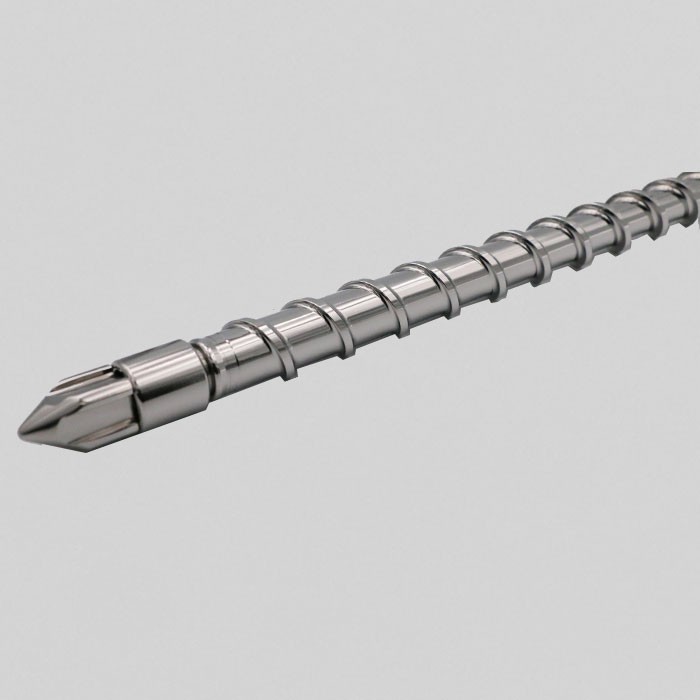
Before delving into the ways to improve plasticizing efficiency, it's essential to understand the plasticizing process itself. The injection molding screw plays a central role in this process. When the screw rotates, it conveys the plastic pellets from the hopper towards the front of the barrel. As the pellets move forward, they are heated by the barrel heaters and subjected to shear forces generated by the screw's rotation. This combination of heat and shear causes the plastic to melt and become homogeneous, ready for injection into the mold.
Selecting the Right Screw Design
The design of the injection molding screw has a profound impact on plasticizing efficiency. Different types of plastics require different screw geometries to ensure optimal melting and mixing.
- Compression Ratio: The compression ratio of a screw is the ratio of the volume of the feed section to the volume of the metering section. A higher compression ratio is suitable for more viscous plastics as it provides greater shear and pressure to melt the plastic. For example, engineering plastics like polycarbonate often require a screw with a higher compression ratio compared to polypropylene.
- L/D Ratio: The length - to - diameter (L/D) ratio of the screw also affects plasticizing efficiency. A higher L/D ratio allows for more residence time of the plastic in the barrel, which promotes better melting and mixing. However, a very high L/D ratio can increase the risk of thermal degradation of the plastic. Generally, for most common plastics, an L/D ratio between 20:1 and 25:1 is a good balance.
As an injection molding screw supplier, we offer a wide range of screw designs to meet different plasticizing requirements. Our [Pvd Coating Screw](/screw/injection - molding - screw/pvd - coating - screw.html) is designed with advanced coating technology, which not only improves wear resistance but also enhances the plasticizing performance. The [Fully Hardened Alloy Screw for Injection Molding Machine](/screw/injection - molding - screw/fully - hardened - alloy - screw - for - injection.html) is made of high - quality alloy materials, providing excellent strength and corrosion resistance, suitable for high - performance plasticizing applications. And our [Bimetallic Screw for Injection Molding Machine](/screw/injection - molding - screw/bimetallic - screw - for - injection - molding.html) combines the advantages of two different metals, offering superior wear and corrosion resistance in harsh molding environments.
Optimizing Barrel Temperature
Proper barrel temperature control is crucial for efficient plasticizing. The temperature profile along the barrel should be carefully set according to the characteristics of the plastic being processed.
- Feed Section: The temperature in the feed section should be low enough to prevent the plastic pellets from melting prematurely and sticking to the screw. This helps to ensure a smooth flow of the plastic into the barrel.
- Compression Section: As the plastic moves into the compression section, the temperature gradually increases to start the melting process. The temperature here should be adjusted to provide sufficient heat for the plastic to start softening and mixing.
- Metering Section: In the metering section, the temperature should be maintained at a level that ensures the plastic is fully melted and homogeneous. A stable and accurate temperature in this section is essential for consistent plasticizing quality.
It's important to note that different plastics have different melting points and processing temperature ranges. For example, polyethylene has a relatively low melting point compared to polyetheretherketone (PEEK). Therefore, the barrel temperature settings need to be tailored to the specific plastic being used.
Controlling Screw Speed and Back Pressure
The screw speed and back pressure are two important parameters that can significantly affect plasticizing efficiency.
- Screw Speed: Increasing the screw speed can increase the plasticizing rate, but it also has some limitations. If the screw speed is too high, it can cause excessive shear heating, which may lead to thermal degradation of the plastic. On the other hand, a very low screw speed may result in poor plasticizing efficiency and longer cycle times. Therefore, it's necessary to find the optimal screw speed for each plastic and application.
- Back Pressure: Back pressure is the pressure exerted on the screw during the plasticizing process. A proper back pressure helps to improve the mixing and melting of the plastic by forcing the molten plastic to flow back through the flights of the screw. However, too much back pressure can increase the power consumption and may also cause the plastic to overheat. A general rule of thumb is to start with a low back pressure and gradually increase it until the desired plasticizing quality is achieved.
Regular Maintenance of the Screw and Barrel
Regular maintenance of the injection molding screw and barrel is essential for maintaining high plasticizing efficiency.

- Cleaning: After each production run, the screw and barrel should be thoroughly cleaned to remove any residual plastic. This prevents the build - up of degraded plastic, which can affect the plasticizing performance and the quality of the molded parts.
- Inspection: Regularly inspect the screw and barrel for signs of wear, such as scratches, grooves, or excessive clearance between the screw and the barrel. Worn components can lead to poor plasticizing efficiency, leakage, and inconsistent molding quality. If any wear is detected, the worn parts should be replaced in a timely manner.
- Lubrication: Some injection molding screws require proper lubrication to ensure smooth rotation. However, it's important to use the correct type of lubricant and apply it in the right amount to avoid contamination of the plastic.
Using High - Quality Plastics
The quality of the plastic used in the injection molding process also has a significant impact on plasticizing efficiency. High - quality plastics with consistent particle size, density, and moisture content are easier to plasticize.
- Particle Size: Plastics with a uniform particle size allow for more consistent melting and mixing. If the particle size is too large or too inconsistent, it can lead to uneven melting and poor plasticizing quality.
- Moisture Content: Moisture in the plastic can cause problems during the plasticizing process, such as foaming, voids, and reduced mechanical properties of the molded parts. Therefore, it's important to dry the plastic properly before processing, especially for hygroscopic plastics like nylon.
Conclusion
Improving the plasticizing efficiency of an injection molding screw is a multi - faceted task that requires careful consideration of screw design, barrel temperature, screw speed, back pressure, maintenance, and plastic quality. As an injection molding screw supplier, we are committed to providing our customers with high - quality screws and professional technical support to help them achieve optimal plasticizing efficiency.
If you're looking to enhance the plasticizing performance of your injection molding process, we'd love to discuss your specific needs. Whether you need a new screw or advice on optimizing your existing setup, our team of experts is ready to assist you. Contact us to start a procurement discussion and take your injection molding production to the next level.
References
- Rosato, D. V., & Rosato, D. V. (2004). Injection Molding Handbook. Hanser Gardner Publications.
- Beaumont, J. P. (2003). Successful Injection Molding: How to Select, Process, and Troubleshoot Engineering Thermoplastics. Hanser Gardner Publications.
- Throne, J. L. (1996). Thermoplastic Injection Molding: Materials, Processing, and Tooling. Marcel Dekker.