

Hey there! As a supplier of injection molding barrels, I'm super stoked to dive into how these nifty pieces of equipment work. Injection molding barrels are a crucial part of the injection molding process, and understanding their functionality can give you a leg up in the manufacturing game.
Let's start from the basics. An injection molding barrel is like the heart of an injection molding machine. It's where the magic happens - where solid plastic pellets are transformed into a molten, moldable substance. Picture it as a long, cylindrical tube that houses a screw inside. This setup is designed to heat, mix, and pump the plastic into the mold cavity to create all sorts of plastic products we use every day, from toys to automotive parts.
The Heating Process
The first step in the operation of an injection molding barrel is heating the plastic pellets. The barrel is equipped with heating bands wrapped around its exterior. These heating bands are carefully controlled to maintain a specific temperature range. Different types of plastics require different melting points, so the temperature needs to be adjusted accordingly. For example, polyethylene has a relatively low melting point, while polycarbonate requires a much higher temperature to melt.

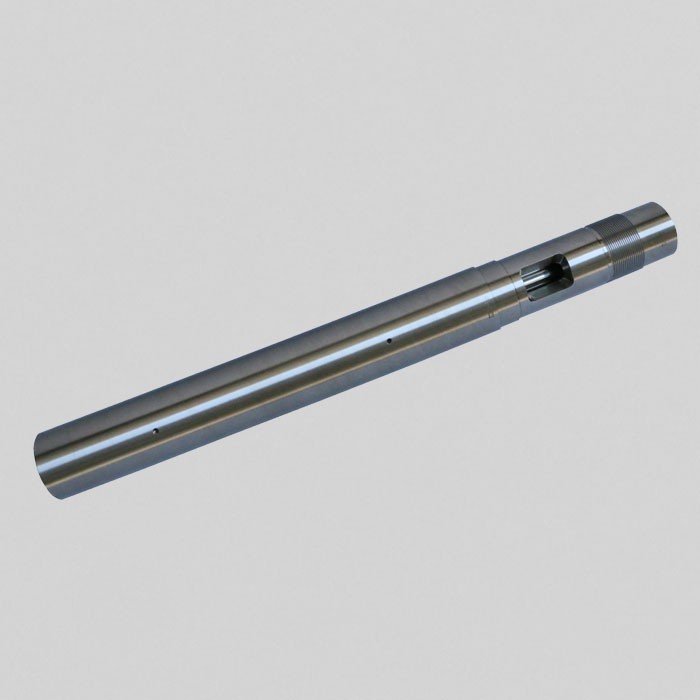
Once the heating bands are turned on, they gradually raise the temperature of the barrel. As the plastic pellets enter the barrel through the hopper at the rear, they start to absorb the heat. The heat softens the pellets, and as they move further down the barrel, they begin to transform into a viscous, molten state. This is a critical stage because if the temperature is too low, the plastic won't melt properly, leading to incomplete filling of the mold. On the other hand, if the temperature is too high, the plastic can degrade, causing issues like discoloration and a decrease in the mechanical properties of the final product.
The Screw's Role
Now, let's talk about the screw inside the barrel. The screw is like the workhorse of the injection molding process. It has multiple functions, and it's designed to move the plastic forward, mix it thoroughly, and build up pressure for injection.
As the plastic pellets enter the barrel, the screw starts to rotate. The rotation of the screw creates a forward movement of the plastic along the barrel. The screw has different sections, each with a specific purpose. The feed section at the rear of the screw is responsible for picking up the plastic pellets from the hopper and transporting them forward. This section has a relatively large pitch, which allows for efficient feeding of the pellets.
As the plastic moves towards the front of the barrel, it enters the compression section. In this section, the pitch of the screw gradually decreases, which compresses the plastic. This compression helps to remove any air pockets in the plastic and further melts it by generating additional heat through friction. The compression also ensures that the plastic is well-mixed, so the final product has a consistent quality.
Finally, the plastic reaches the metering section at the front of the screw. In this section, the pitch of the screw is constant, and its main function is to meter the exact amount of molten plastic that will be injected into the mold. The screw stops rotating once the desired amount of plastic has been metered.
Injection Phase
Once the plastic is in a molten state and the right amount has been metered, it's time for the injection phase. The screw acts as a plunger during this stage. A hydraulic or electric actuator pushes the screw forward, forcing the molten plastic out of the barrel through the nozzle at the front. The nozzle is connected to the mold cavity, and the plastic is injected into the mold under high pressure.
The pressure required for injection depends on the size and complexity of the mold, as well as the type of plastic being used. High-pressure injection is necessary to ensure that the plastic fills all the intricate details of the mold. Once the mold is filled, the screw holds the pressure for a short period to allow the plastic to cool and solidify. This is called the holding pressure phase, and it helps to prevent shrinkage and ensure the dimensional accuracy of the final product.
Cooling and Ejection
After the holding pressure phase, the cooling process begins. The mold is usually equipped with cooling channels that circulate water or another coolant to remove the heat from the plastic. As the plastic cools, it solidifies into the shape of the mold cavity. The cooling time depends on the thickness of the part and the type of plastic. Thicker parts and plastics with higher thermal conductivity require longer cooling times.
Once the plastic has solidified, the mold opens, and the finished part is ejected. Ejection pins or other ejection mechanisms are used to push the part out of the mold. The part is then removed from the machine, and the process can start all over again.
Types of Injection Molding Barrels
There are different types of injection molding barrels available, each with its own advantages and applications. One popular type is the Bimetallic Barrel for Injection Molding Machine. Bimetallic barrels are made by bonding a layer of wear-resistant alloy to the inner surface of a steel barrel. This combination provides excellent wear resistance and corrosion resistance, making it suitable for processing abrasive plastics and engineering plastics.
Another type is the Sintered Hard Alloy Barrel for Injection Molding Machine. Sintered hard alloy barrels are made by sintering tungsten carbide particles together. They offer extremely high hardness and wear resistance, making them ideal for processing highly abrasive plastics, such as glass-filled polymers.
The Plastic Injection Screw Barrel is also a common type. It is designed specifically for processing plastics and is available in different configurations to suit various applications. The screw and barrel are carefully matched to ensure efficient plasticizing and injection.
Why Choose Our Injection Molding Barrels
As a supplier of injection molding barrels, we take pride in offering high-quality products that are designed to meet the needs of our customers. Our barrels are made from the best materials and are manufactured using advanced techniques to ensure superior performance and durability.
We understand that every customer has unique requirements, so we offer a wide range of barrels to choose from. Whether you need a standard barrel or a custom-designed one, we can provide a solution that fits your needs. Our team of experts is always available to offer technical support and advice, so you can make the right choice for your injection molding process.
If you're in the market for injection molding barrels, we'd love to hear from you. Whether you're a small business looking to upgrade your equipment or a large manufacturer in need of a reliable supplier, we can help. Contact us today to discuss your requirements and let's start a conversation about how our injection molding barrels can improve your production process.
References
- "Injection Molding Handbook" by O. Osswald, T. Turng, and P. Gramann.
- "Plastics Processing: Modeling and Simulation" by J. Vlachopoulos.
- Various industry publications and technical resources.