

Hey there! As a supplier of HVOF coating screws, I often get asked if HVOF coating can be used on screws in the jewelry industry. So, I thought I'd dive into this topic and share my thoughts.
First off, let's talk about what HVOF coating is. High-Velocity Oxygen Fuel (HVOF) coating is a thermal spray process. It works by spraying a coating material onto a substrate at a super-high velocity. This creates a dense, well-bonded coating that can offer some pretty amazing properties. The coating material can be various metals, ceramics, or composites, depending on what you need the screw to do.
Now, why would we even think about using HVOF coating on screws in the jewelry industry? Well, the jewelry industry has some unique requirements. Jewelry is often worn daily, so the screws used in it need to be durable. They should resist scratches, corrosion, and wear. And HVOF coating can potentially tick all these boxes.
One of the big advantages of HVOF coating is its hardness. The coating can make the screw surface much harder than the base material. In the jewelry world, this means the screws are less likely to get scratched when they're in contact with other objects or during the normal wear and tear of daily use. For example, if you have a piece of jewelry that's frequently taken on and off, like a bracelet with a screw closure, a hard-coated screw will stay looking good for longer.
Corrosion resistance is another key factor. Jewelry is exposed to all sorts of things, like sweat, lotions, and even the chemicals in the air. These can cause the screws to corrode over time, which not only looks bad but can also weaken the structure of the jewelry. HVOF coating can act as a barrier, protecting the screw from these corrosive elements.
But it's not all sunshine and rainbows. There are also some challenges when it comes to using HVOF coating on jewelry screws. One of the main issues is aesthetics. Jewelry is all about looking good, and the appearance of the coated screw needs to fit in with the overall design of the piece. Some HVOF coatings might have a texture or color that's not ideal for jewelry. For example, a very rough or dark coating might not work well for a delicate, shiny piece of jewelry.
Another challenge is the cost. The HVOF coating process can be relatively expensive compared to other finishing methods. This means that using HVOF-coated screws could increase the overall cost of the jewelry. And in a competitive market, cost is always a major consideration for jewelry manufacturers.
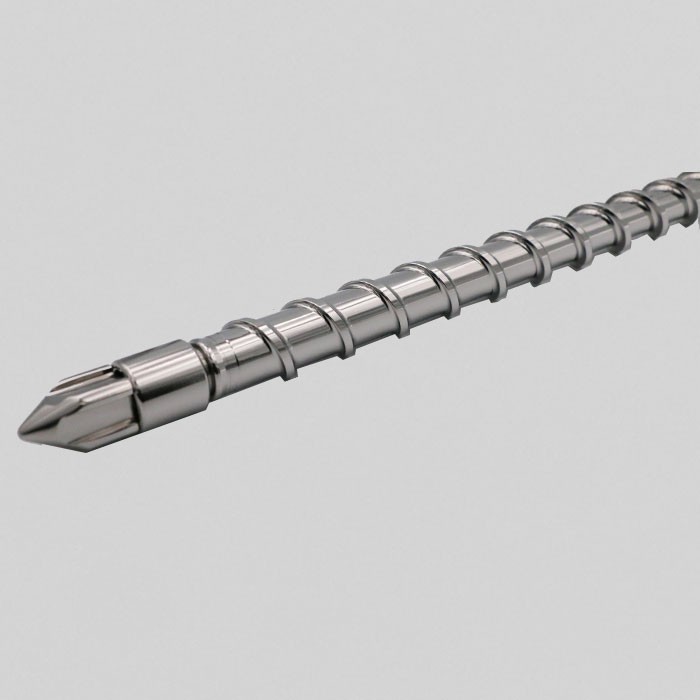
Let's take a look at some alternatives. There are other types of screws and coatings that are commonly used in the jewelry industry. For instance, you might consider the Fully Hardened Alloy Screw for Injection Molding Machine. These screws are made from a fully hardened alloy, which gives them a certain level of durability without the need for additional coating. They're often used in injection molding processes, which can be useful for mass-producing jewelry parts.
Pvd Coating Screw is another option. Physical Vapor Deposition (PVD) coating is a different type of coating process. It can create a thin, smooth coating that's known for its good adhesion and appearance. PVD coatings can come in a variety of colors, which can be a big advantage in the jewelry industry where color matching is important.
Then there's the Sintered Hard Alloy Screw for Injection Molding Machine. Sintered hard alloy screws are made by compacting and heating metal powders. They have high hardness and wear resistance, similar to some HVOF-coated screws. These screws can be a good choice for jewelry applications that require strong and durable fasteners.
So, can HVOF coating be used on screws in the jewelry industry? The answer is yes, but it depends. If the jewelry manufacturer is looking for a high level of durability and is willing to deal with the potential aesthetic and cost issues, then HVOF coating could be a great option. However, if appearance and cost are the top priorities, then other types of screws and coatings might be more suitable.
If you're in the jewelry industry and are interested in exploring the use of HVOF coating screws for your products, I'd love to have a chat. We can discuss your specific needs, the pros and cons in more detail, and see if HVOF coating is the right fit for you. Whether you're looking for a small batch for a new design or a large order for mass production, we can work together to find the best solution.
In conclusion, HVOF coating on jewelry screws has its potential, but it's not a one-size-fits-all solution. By considering all the factors and comparing it with other options, you can make an informed decision that will help you create high-quality, long-lasting jewelry.

References
- "Thermal Spray Coatings: From Technology to Application" by Christian Coddet
- "Handbook of Coating Technology" by Paul K. T. Oldfield