

Can a barrel screw extruder be used for reactive extrusion? This is a question that often arises in the field of polymer processing and related industries. As a supplier of barrel screw extruders, I am well - versed in the capabilities and applications of these machines, and I'm here to delve into this topic in detail.
Understanding Reactive Extrusion
Reactive extrusion is a process where chemical reactions occur simultaneously with the extrusion process. It combines the advantages of continuous processing with chemical synthesis, allowing for the production of polymers with tailored properties. In reactive extrusion, monomers can be polymerized, polymers can be modified, or different polymers can be reacted together. This process is widely used in the production of high - performance polymers, biodegradable materials, and polymer blends.
The Basics of a Barrel Screw Extruder
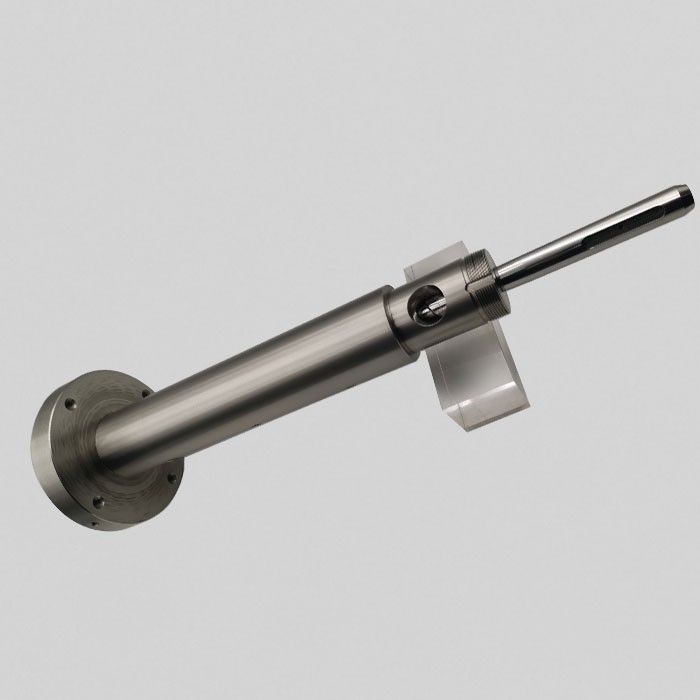
A barrel screw extruder consists of a screw rotating within a barrel. The screw has several functions: it conveys the material along the barrel, melts it through frictional heat and external heating, and mixes the material thoroughly. The barrel is usually heated to control the temperature of the material during processing. The design of the screw and the barrel can be customized according to the specific requirements of the material and the process. For more information on the components of a barrel screw extruder, you can visit Extruder Screw Barrel and Extrusion Barrel.
Can a Barrel Screw Extruder be Used for Reactive Extrusion?
The answer is a resounding yes. A barrel screw extruder is well - suited for reactive extrusion for several reasons:
Mixing Capability
One of the key requirements for reactive extrusion is thorough mixing of the reactants. The screw in a barrel screw extruder provides excellent mixing. As the screw rotates, it creates a complex flow pattern that helps to disperse the reactants evenly. This is crucial for ensuring that the chemical reactions occur uniformly throughout the material. For example, in a polymer blending process where two polymers are reacted to form a new material, proper mixing ensures that the reaction sites on the polymers are in contact with each other, leading to a more homogeneous product.
Temperature Control
Temperature control is essential in reactive extrusion as most chemical reactions are temperature - sensitive. The barrel of a barrel screw extruder can be equipped with heating and cooling systems. This allows for precise control of the temperature along the length of the extruder. Different reaction steps may require different temperatures, and the extruder can be adjusted accordingly. For instance, during the melting phase, a higher temperature is needed to melt the polymers, while during the reaction phase, the temperature may need to be carefully regulated to optimize the reaction rate and prevent side reactions.
Continuous Processing
Reactive extrusion is a continuous process, and barrel screw extruders are designed for continuous operation. This means that large quantities of material can be processed efficiently. Continuous processing reduces the production time and cost compared to batch processes. It also ensures a more consistent product quality as the processing conditions remain relatively stable throughout the production run.
Flexibility in Design
Barrel screw extruders can be designed with different screw geometries and barrel configurations. This flexibility allows for customization based on the specific requirements of the reactive extrusion process. For example, a multi - stage screw design can be used to separate different reaction steps, such as melting, mixing, and reaction. The number of feeding ports and venting ports can also be adjusted to accommodate different reactants and remove volatile by - products.
Examples of Reactive Extrusion Using Barrel Screw Extruders
Polymerization
Barrel screw extruders can be used for in - situ polymerization. Monomers can be fed into the extruder, and under the right temperature and pressure conditions, they can polymerize to form polymers. For example, polyamide can be produced by reactive extrusion of diamines and dicarboxylic acids. The extruder provides the necessary mixing and heat transfer to initiate and sustain the polymerization reaction.
Polymer Modification
Reactive extrusion is also widely used for polymer modification. For example, maleic anhydride - grafted polypropylene can be produced by reacting polypropylene with maleic anhydride in the presence of a free - radical initiator in a barrel screw extruder. This modified polypropylene has improved adhesion and compatibility with other materials, making it suitable for applications such as composite materials.
Polymer Blending with Reaction
When blending different polymers, a chemical reaction can be introduced to improve the compatibility between the polymers. For example, in a blend of polycarbonate and acrylonitrile - butadiene - styrene (ABS), a reactive compatibilizer can be used to enhance the interfacial adhesion between the two polymers. The barrel screw extruder can mix the polymers and the compatibilizer thoroughly and provide the right conditions for the reaction to occur.
Challenges and Considerations in Using Barrel Screw Extruders for Reactive Extrusion
While barrel screw extruders are suitable for reactive extrusion, there are some challenges and considerations:

Residence Time Distribution
The residence time of the material in the extruder can vary, which may lead to inconsistent reaction extents. It is important to design the screw and the extruder configuration to minimize the residence time distribution. This can be achieved by using proper screw geometries and optimizing the flow rate.
Side Reactions
Some chemical reactions may have side reactions that can affect the quality of the final product. Temperature control and the use of appropriate catalysts or inhibitors are necessary to minimize side reactions. For example, in a polymerization reaction, high temperatures may lead to chain scission or cross - linking reactions that are not desired.
Wear and Corrosion
Reactive extrusion may involve the use of corrosive chemicals or abrasive materials. The screw and the barrel of the extruder need to be made of materials that can withstand wear and corrosion. Special coatings or high - performance alloys can be used to protect the components.
Conclusion
In conclusion, a barrel screw extruder can indeed be used for reactive extrusion. Its excellent mixing capability, temperature control, continuous processing, and design flexibility make it a suitable choice for a wide range of reactive extrusion applications. Whether it is polymerization, polymer modification, or polymer blending with reaction, a barrel screw extruder can provide the necessary processing conditions to achieve high - quality products.
If you are interested in using a barrel screw extruder for your reactive extrusion process, or if you have any questions about our Barrel Screw Extruder products, please feel free to contact us for more information and to discuss your specific requirements. We are committed to providing high - quality equipment and excellent technical support to help you achieve your production goals.
References
- Xanthos, M. (Ed.). (1992). Reactive Extrusion: Principles and Practice. Hanser Publishers.
- Tadmor, Z., & Gogos, C. G. (2006). Principles of Polymer Processing. Wiley - Interscience.
- Rauwendaal, C. (2014). Polymer Extrusion. Hanser Publishers.